Best Developmental Toys for Babies and Toddlers: My Complete Guide by Age (0 to 2 Years)
Which developmental toy is right for your baby? I'll help you choose by age (0 to 2 years), by developmental stage and by budget, with picks you can actually find on amazon.com. A practical, judgment-free guide.
It's the question I get most often in my notebook: "Ludik, which toy should I get for my baby?" You're standing in the toy aisle (or scrolling at 2 a.m.), you see 200 options, you read "boosts brain development" and "stimulates the senses," and you wonder what's true and what's marketing.
Let's look at it together. I've prepared a page of my notebook for each big milestone, from newborn to the toddler who's just started walking.
The teddy bear who's got your back.
What Makes a "Good" Developmental Toy (My 5 Rules)
✍️ Ludik's margin note: these 5 rules are my filter. Keep them in mind every time you shop, and you'll almost never get it wrong.
1. The Toy Fits Your Baby's Stage (Not Just the Number on the Box)
The age on the box ("6M+") is a starting point, and it's often about safety, so never go below it. Above it, follow your little one. A baby who isn't mouthing toys yet doesn't need a teether. A baby who's been sitting steadily for weeks is ready for toys that keep both hands busy. Watch your child, then read the box.
2. Safety Is Non-Negotiable (No Small Parts, a Known Maker)
In the U.S., toys made for kids under 3 can't contain small parts at all, and every toy for kids 12 and under must meet the ASTM F963 safety standard and be tested by a CPSC-accepted lab. For wood: water-based paint or a natural finish. For fabric: machine-washable. If a baby toy doesn't say who made it, I pass. Everything you need to know is in my toy safety guide.
3. The Toy Rewards What Your Baby Does (Not the Other Way Around)
A good developmental toy does something because your baby did something: they press, it plays a sound. They shake, it rattles. They bang, it booms. Toys that "do everything on their own" (lights and songs on a loop) spark less curiosity than toys that need an action. Choose a baby who acts, not a baby who watches.
4. The Toy Lasts Through Several Stages
A play gym with removable toys works from birth to about 12 months. A soft activity cube works from about 3 to 15 months. The cost per month of play gets good as soon as a toy covers 2 or 3 stages. Go for toys that grow with your baby when your budget allows.
5. The Toy Delights YOUR Baby (Not the Manufacturer's Average Baby)
Babies don't all love the same things. Some adore textures, others prefer sounds, others movement. During the first 3 months, notice what makes your baby smile or focus. That's your best shopping guide for later.
Toys for 0 to 3 Months: Mobiles, Contrast, a First Rattle
At this age, babies see best in high contrast (black, white, red), at about 8 to 12 inches from their face. Touch, hearing and sight are the only real doors you can knock on.
A Musical Mobile
Ludik's pick. A mobile that turns slowly with a soft melody. It encourages your baby to focus and follow with their eyes, calms bedtime, and buys a tired parent a few precious minutes.
What I'll honestly tell you: I'd have loved to show you a wind-up wooden mobile with no batteries, but I haven't found one on amazon.com that I'm happy to vouch for yet. The Tiny Love below runs on batteries: that's my trade-off for a mobile that's easy to get. It clips onto the crib, the stroller or the play yard. One safety rule: hang it out of reach, and take any crib mobile down once your baby can get up on hands and knees, or at 5 months, whichever comes first (healthychildren.org, from the American Academy of Pediatrics).
Tiny Love 3-in-1 Take Along Mobile
From birth
High-Contrast Black and White Cards
Cards with simple black and white patterns (sometimes a touch of red). Show them to your baby for 5 to 10 minutes while they're awake and alert, or prop them up during tummy time. Simple, cheap, and a real hit with newborns, who can see bold contrast long before soft pastels.
beiens High Contrast Baby Flash Cards
From birth
A Ring Rattle for That First Grab
A smooth wooden ring with a soft crocheted animal, to offer your baby when they start reaching and grabbing (around 2 to 3 months). Easy to hold, nice to shake, and safe to chew when the gums start itching. A gentle first grasping toy for the early months.
Joliecraft Woodland Friends Wooden Ring Rattle
First grab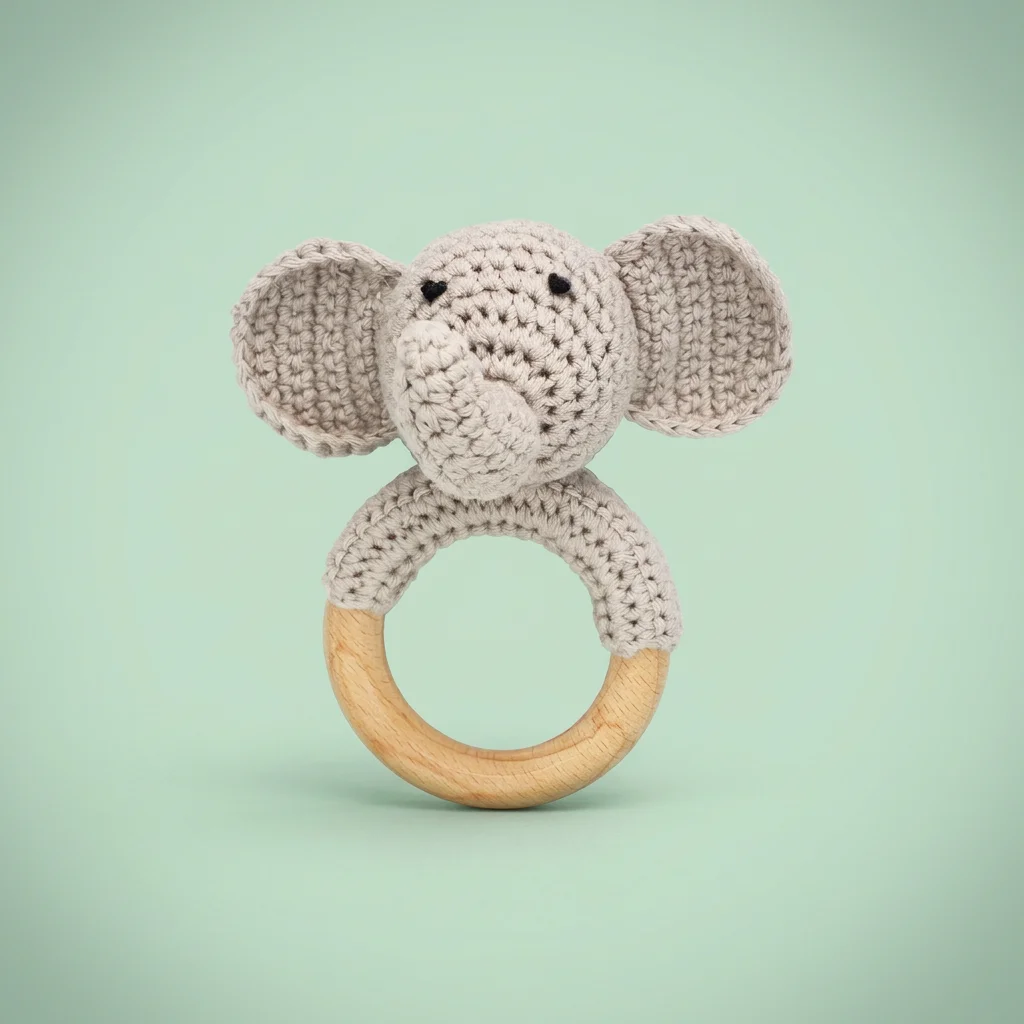
A Play Gym That Grows With Your Baby
A play gym is the registry classic for good reason: it covers tummy time, then lying on the back and batting at toys, then sitting up. This one adds a kick-to-play piano that rewards every little kick with music, which is rule number 3 in action. It's the best "grows with them" buy for the first year.
Baby Einstein 4-in-1 Kickin' Tunes Music and Language Play Gym
From birth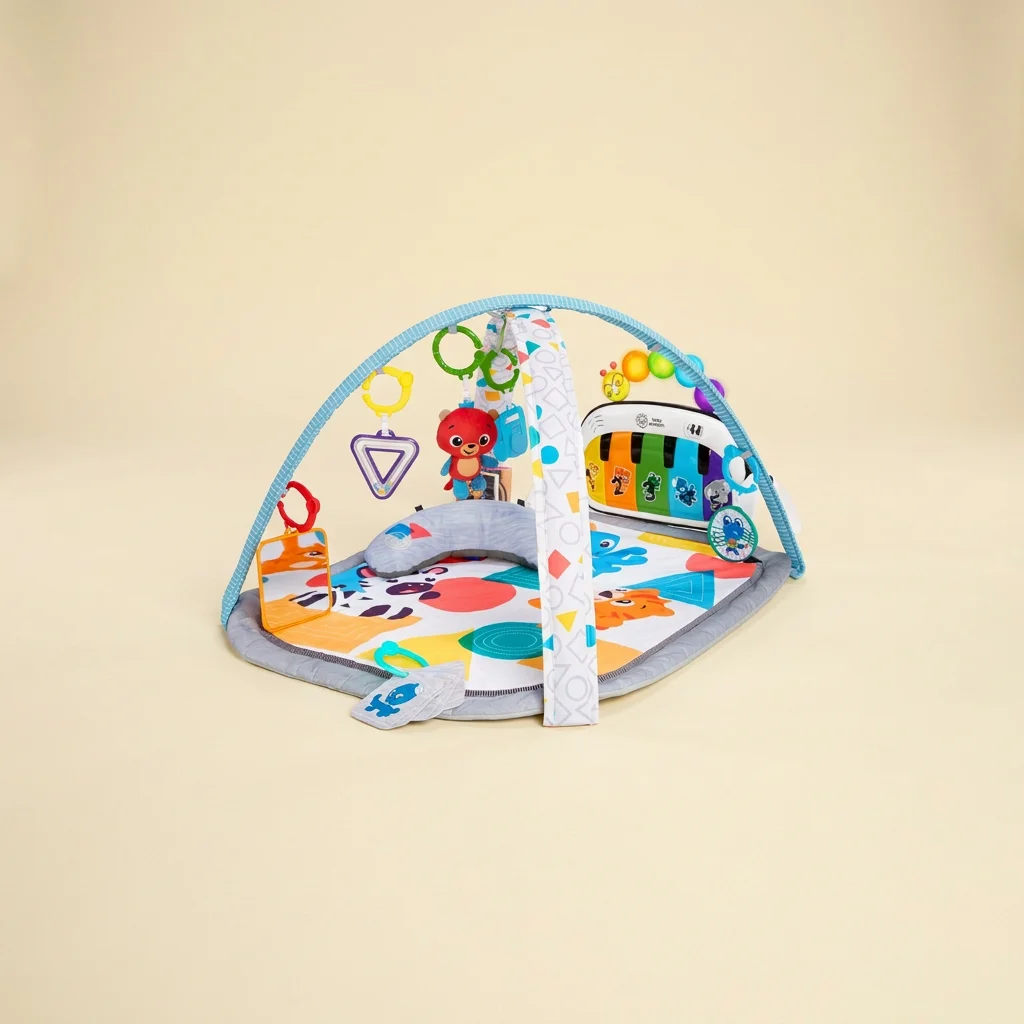
Toys for 3 to 6 Months: Grasping, Textures, Mirrors
Around 3 months, babies start to grab on purpose. Around 5 months, they pass toys from one hand to the other. It's a sensory explosion.
Sophie the Giraffe: The Legendary Teether
Made of natural rubber, shaped for tiny hands, and her squeak rewards every squeeze. A classic since 1961, and still one of the best first teethers. One care tip: don't submerge her (she has a squeaker hole), wipe her clean instead.
Sophie the Giraffe Award Gift Set
From birth
Lamaze's Crinkly Octopus
Ludik's pick. A soft fabric octopus full of crinkles, rattles and textures, in high-contrast colors, that clips onto the stroller or car seat. Baby grabs a leg, it crinkles; shakes it, it rattles. Machine-washable fabric and tough enough for months of chewing and tugging. One toy that covers the whole first year.
Lamaze Captain Calamari Clip-On Toy
From birth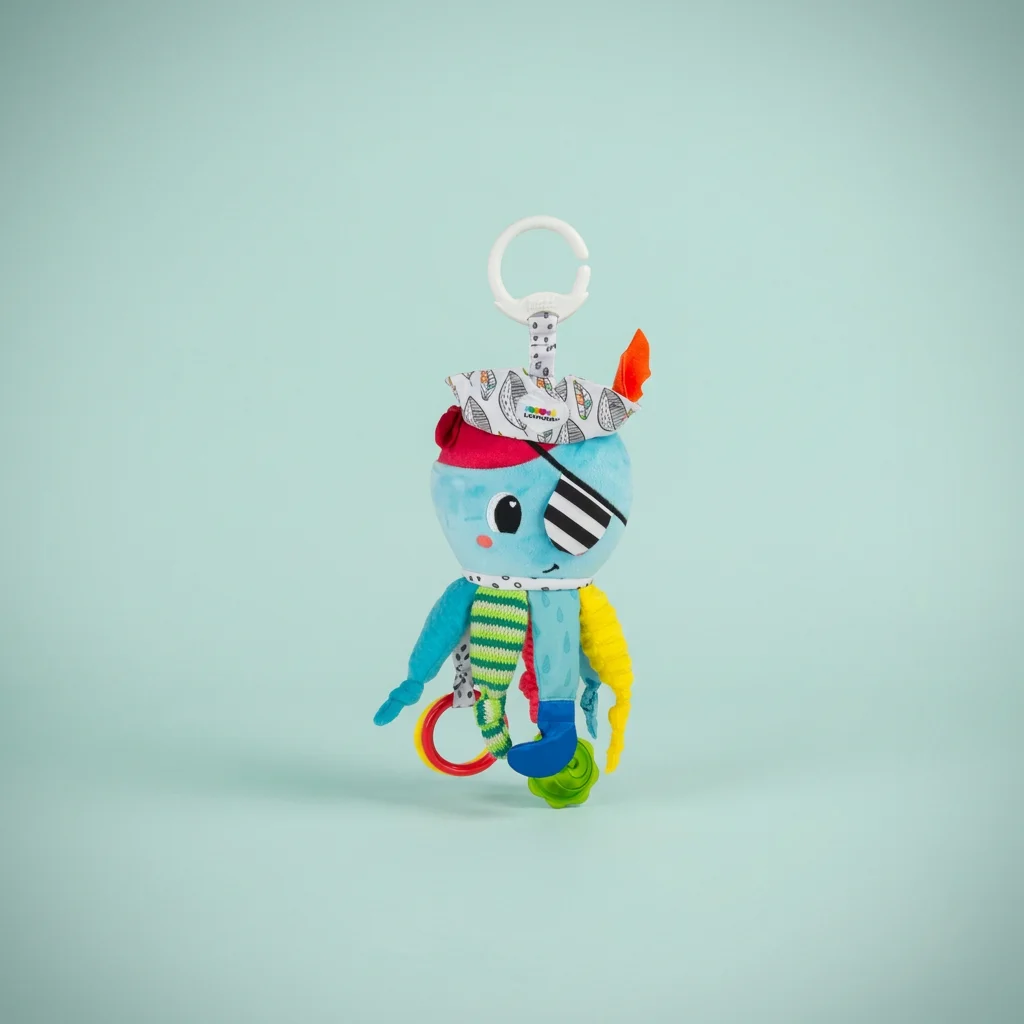
A Soft Activity Cube With a Mirror
Around this age, babies are fascinated by faces, including the one in the mirror (they won't know it's them for a while yet, but they love it). A soft cube with crinkles, squeakers, a baby-safe mirror and a farm friend on every side gives them something new on each face. Easy to grab, easy to wash, and it keeps working well past the first birthday.
Melissa & Doug K's Kids Musical Farmyard Cube
Soft cube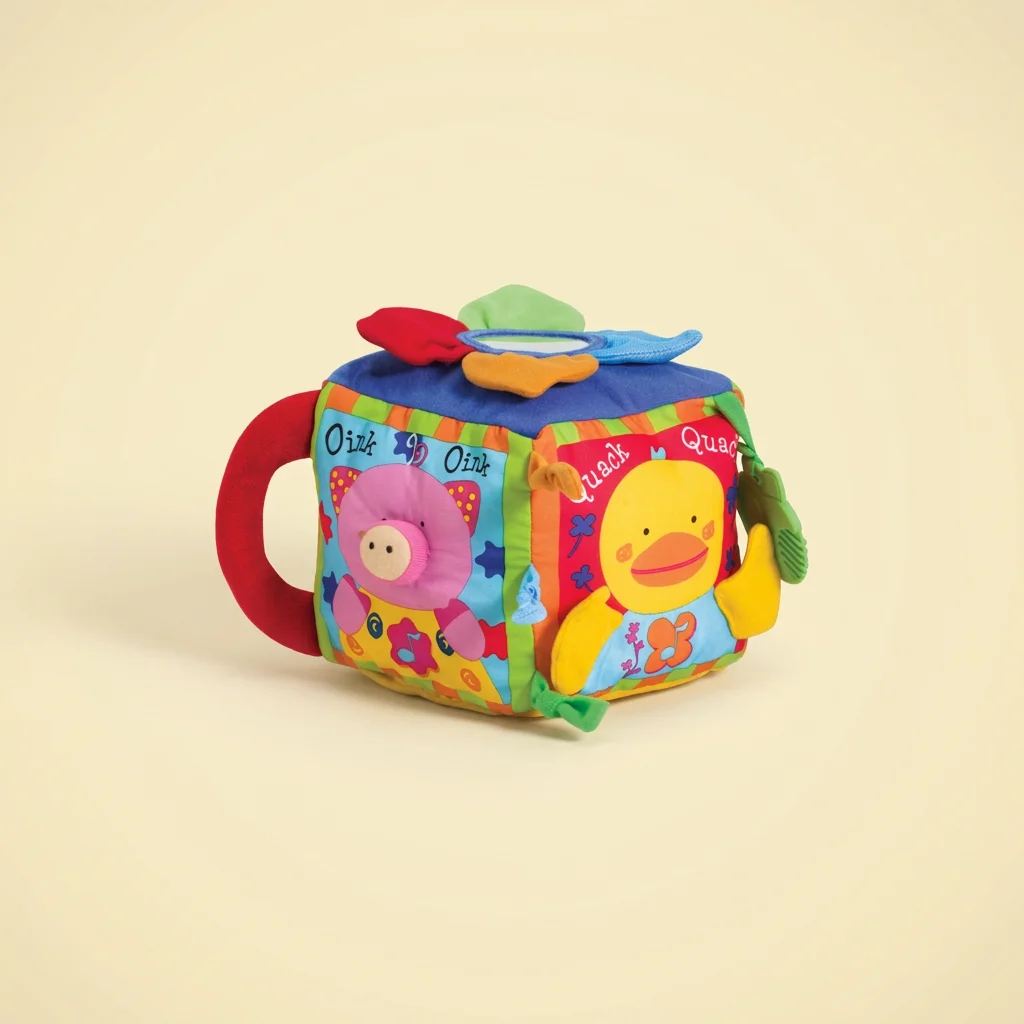
Toys for 6 to 12 Months: Motor Skills, Stacking, First Sounds
This is the golden age of developmental toys. Your baby is everywhere, handles everything and puts everything in their mouth. Object permanence (knowing a toy still exists when it's hidden) shows up around 8 or 9 months.
Suction Rattles for the High Chair
Once your baby sits in the high chair, you'll discover a new sport: throwing every toy on the floor. These three sea-animal rattles stick to the tray with suction cups, so your baby can bat, spin and shake them without dropping them (and without you picking them up 40 times per meal).
Hape Put-Stay Suction Rattle Set (Sea Animals)
High chair fun
A Wooden Peg Puzzle to Sort and Stack (Hape)
Chunky wooden shapes in four color families that slide onto pegs, on a base that is itself a 4-piece jigsaw puzzle. Near the first birthday, your baby mostly pulls the pieces off (that's play too). A few months later, they start matching shapes to pegs, and by around 18 months they're stacking by color. Check the age grade on the listing before you hand it over.
Hape Wooden Creative Peg Puzzle
Sort and stack
Stacking and Nesting Boxes (TOWO)
Ten boxes to stack into a tower or nest inside each other, with numbers and animals on the sides. Babies LOVE knocking the tower down (that's cause and effect, and it's hilarious). Around 9 or 10 months, they start trying to stack themselves. Later, the numbers and animal names make great first words.
What I'll honestly tell you: PlanToys (a great eco-friendly wooden brand for babies) makes lovely stackers too. I went with TOWO here because the numbers and animals keep it useful long after the stacking phase.
TOWO Wooden Stacking and Nesting Boxes
Stack and nest
Toys for 12 to 24 Months: Fine Motor Skills, Words, Pretend Play
Your little one becomes an explorer. They walk, they talk, they copy everything you do.
A First Ride-On That Becomes a Balance Bike
Ludik's pick. The first "vehicle." It builds gross motor skills and balance, and toddlers adore going somewhere on their own. This convertible one starts as a ride-on with a parent handle and grows into a balance bike, so it follows your little buddy from about 1 to 4 years old.
besrey 5-in-1 Toddler Bike
Ages 1 to 4
A First Knob Puzzle (GOKI)
Chunky wooden animals (a puppy, a duckling, a bunny and a kitten) with easy-grip knobs for little fingers. The listing says ages 1 and up; most toddlers really get it between 18 months and 2. Simple, sturdy, and it lasts.
GOKI Wooden Farm Animals Peg Puzzle
Ages 1 to 3
A Wooden Cooking Set (First Pretend Play)
Around 18 to 24 months, pretend play kicks in: "I'm doing it like Mommy, like Daddy." A small wooden cooking set (a pan, a few utensils, some play food) sparks hours of make-believe. My pick is Hape's Playfully Delicious Chef's Cooking Set: Hape rates it from age 3, so before then it's a play-together set, with you next to your toddler at the toy stove.
Hape Playfully Delicious Chef's Cooking Set
Pretend play
Board Books: The Very Hungry Caterpillar
At this age, toddlers point at pictures and name them. Thick board books survive the chewing years. Eric Carle's caterpillar is a classic that families have passed down for generations: the die-cut holes are irresistible for little fingers, and it sneaks in counting and the days of the week. A sweet bedtime ritual that calms and builds language.
The Very Hungry Caterpillar by Eric Carle (Board Book)
Board book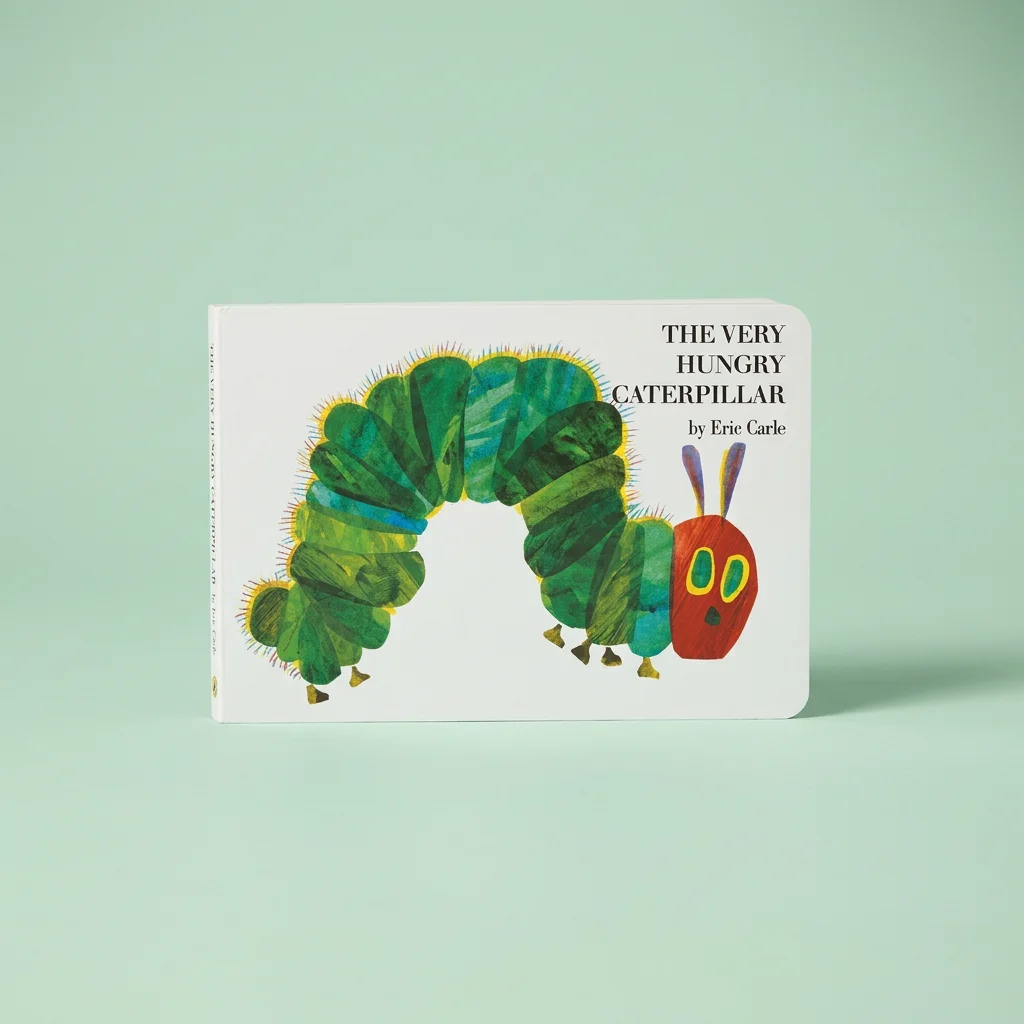
Montessori, Wood or Plastic: My Straight-Talk Take
The "Montessori" Label Guarantees Nothing
In the U.S., the word "Montessori" isn't protected: any maker can put it on a box. What really counts are the Montessori principles: the child can see and fix their own mistake, natural materials, simplicity, a prepared environment. A simple plastic toy can be very Montessori. A complicated wooden toy covered in labels may not be at all. More in my guide: Is "Montessori" on a toy box just a label?
Wood vs Plastic: A False Choice
A good plastic toy (BPA-free, within the CPSC's phthalate limits, tested to ASTM F963) is often safer than a cheap wooden toy with an unlisted finish. Wood ages more beautifully and usually lasts longer. But brand new, on pure safety, both can be equally good. What matters: the safety testing and the materials listed, not the material itself.
My Personal Mix at Home
If I had to recommend a mix for a balanced baby room: about 60% wooden toys (durable, timeless), 30% fabric toys (soft, washable), and 10% carefully chosen plastic (for specific jobs like teething or the bath).
How I'd Choose by Monthly Budget
✍️ Ludik's margin note: here's the table I wish I'd had back when I was a young advice bear.
| Monthly budget | Strategy | Example by age |
|---|---|---|
| Under $20 a month | One well-chosen toy per stage (every 3 months) | Soft activity cube at 6 months, knob puzzle at 18 months |
| $20 to $40 a month | One main toy plus one extra | Activity cube plus a crinkly cloth book at 6 months |
| $40 to $80 a month | A toy that grows with them plus extras | Play gym, convertible toddler bike and a pretend play set, spread out over the year |
| $80 a month and up | A full setup per stage plus a little library | Several themed toys plus 5 to 10 board books |
My universal advice: 3 well-chosen toys that get played with a lot beat 15 toys forgotten under the couch. Toy rotation (hide two-thirds of the toys and bring them back in turns) works better than piling up. I explain how in my fewer toys, better play guide.
Questions Parents Often Ask Me
Does my baby need lots of toys to develop well?
No. What babies need most is you: your face, your voice, your songs, the stories you read together. Toys are there to support that, not replace it. 5 to 8 well-chosen toys, rotated regularly, beat 30 toys piled up. The best developmental toy is still a grown-up who talks, sings and reads.
How much should I spend on toys from 0 to 2 years?
There's no right number. You can do the first two years very well with around $100 spent wisely (3 toys that grow with your baby plus 5 to 10 board books). You can also spend a lot more. As long as you talk, play and read together every day, the extra spending matters far less than you'd think.
My baby gets bored of their toys after 2 weeks. Is that normal?
Yes, 100%. Novelty is a powerful driver of learning. The trick: rotation. Put away a third of the toys for 2 or 3 weeks, then bring them back. They feel "new" again. No need to buy more.
What's a newborn gift that will actually get used?
The "useful baby gift" test: will it be used BEFORE 6 months? If yes (a play gym, a mobile, a rattle, high-contrast cards, board books), it's a great gift. If not (a puzzle, a play kitchen, a first bike), it's lovely but it'll sit in a closet for a year. A lovey is a sweet gift too, for cuddles and play time: the American Academy of Pediatrics advises keeping stuffed toys and soft objects out of the crib, and most experts consider the risk low only after 12 months. If your family does a baby registry, keep it short and targeted.
Should I buy "Montessori" toys specifically?
Not if you're shopping for the label. Yes if you like the principles (simplicity, self-correction, independence). A basic wooden shape puzzle follows Montessori principles without the label. A toy covered with the word "Montessori" may not follow them at all. Look for the principles, not the word.
Sources (checked November 18, 2026): healthychildren.org (American Academy of Pediatrics), "Make Baby's Room Safe" (crib mobiles) and "How to Keep Your Sleeping Baby Safe" (soft objects in the crib, updated April 30, 2026) · CPSC toy safety guidance.