What Are Sensory Toys for Babies?
Sensory toys are all the toys designed to wake up the five senses in the first year: sight (contrast, colors), hearing (soft sounds, voices, music), touch (textures, warm and cool), movement (grasping, coordination) and, indirectly, smell.
It's the very first category, the one that feeds a baby's earliest brain connections. The right toy at this age isn't spectacular: it simply fits the stage your baby is in.
Before 6 months, go for black-and-white contrast. Babies only start seeing bright colors well from about 4 to 6 months. Pastels look lovely to parents, but they're often invisible to a newborn.
Top 10 Sensory Toys for Babies: My Picks
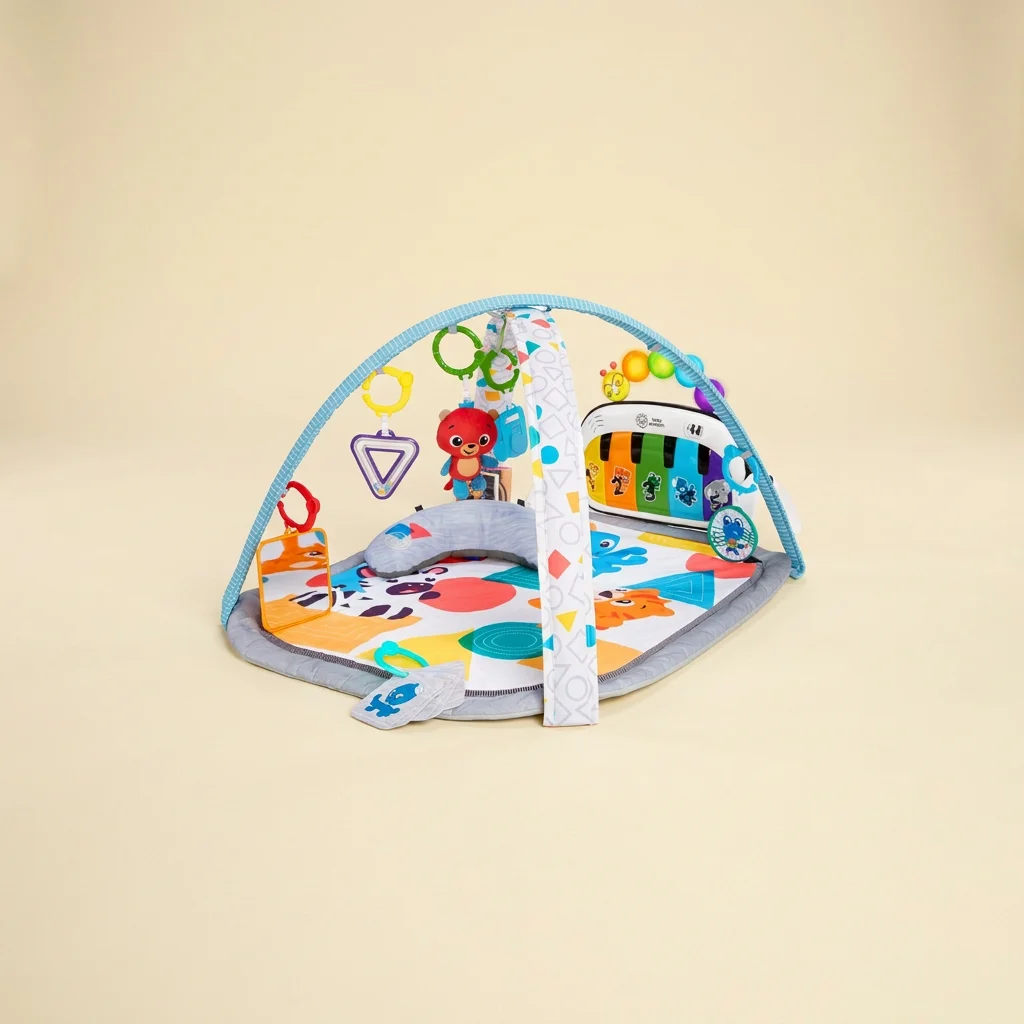
Baby Einstein 4-in-1 Kickin' Tunes Music and Language Play Gym
A play gym with a kick-to-play piano that rewards every little kick with music. Four ways to play, from tummy time to sitting up: sight, sound and movement in one mat.
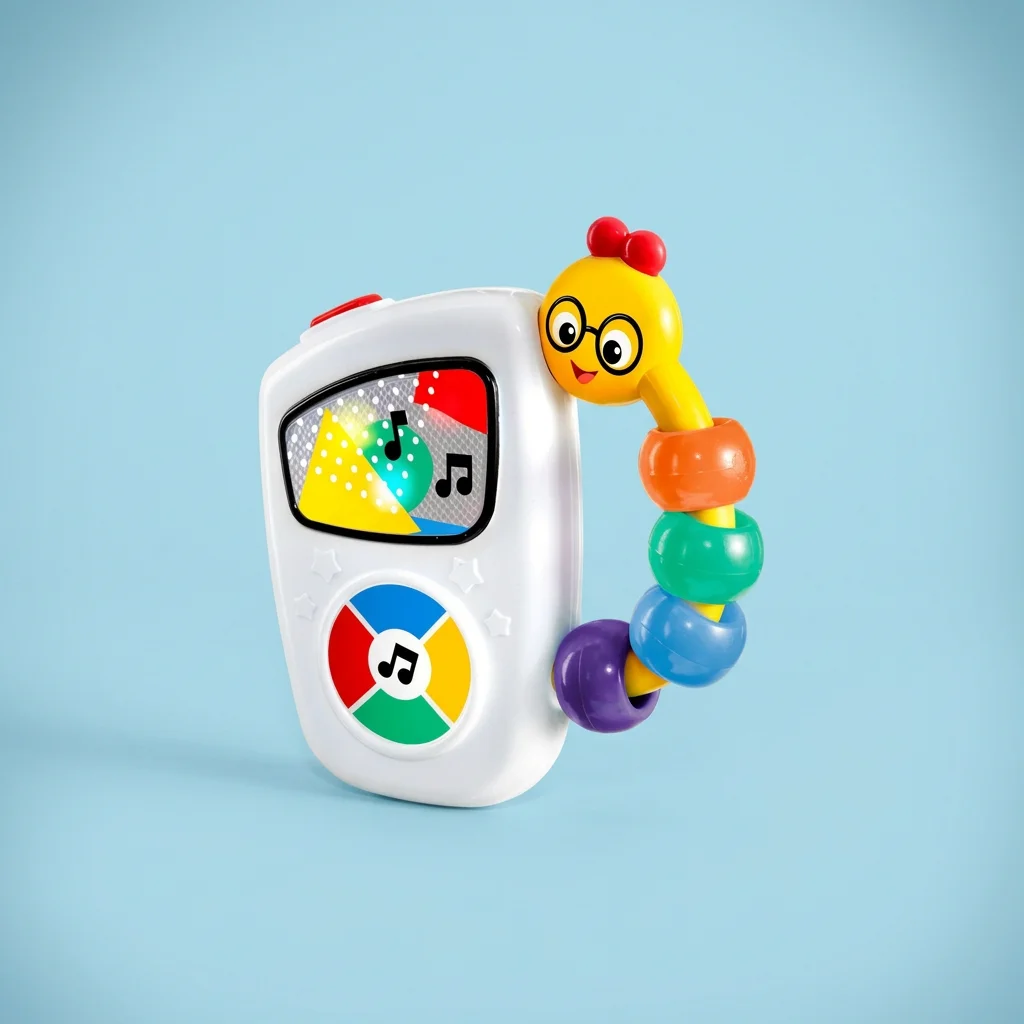
Baby Einstein Take Along Tunes Musical Toy
A palm-size music toy with classical tunes and soft lights that babies learn to switch on all by themselves. Cause and effect in one big button.

Sophie the Giraffe Original Teether
Soft natural rubber that's easy to grip, squeak and chew: touch, sound and soothing for sore gums. A classic since 1961.
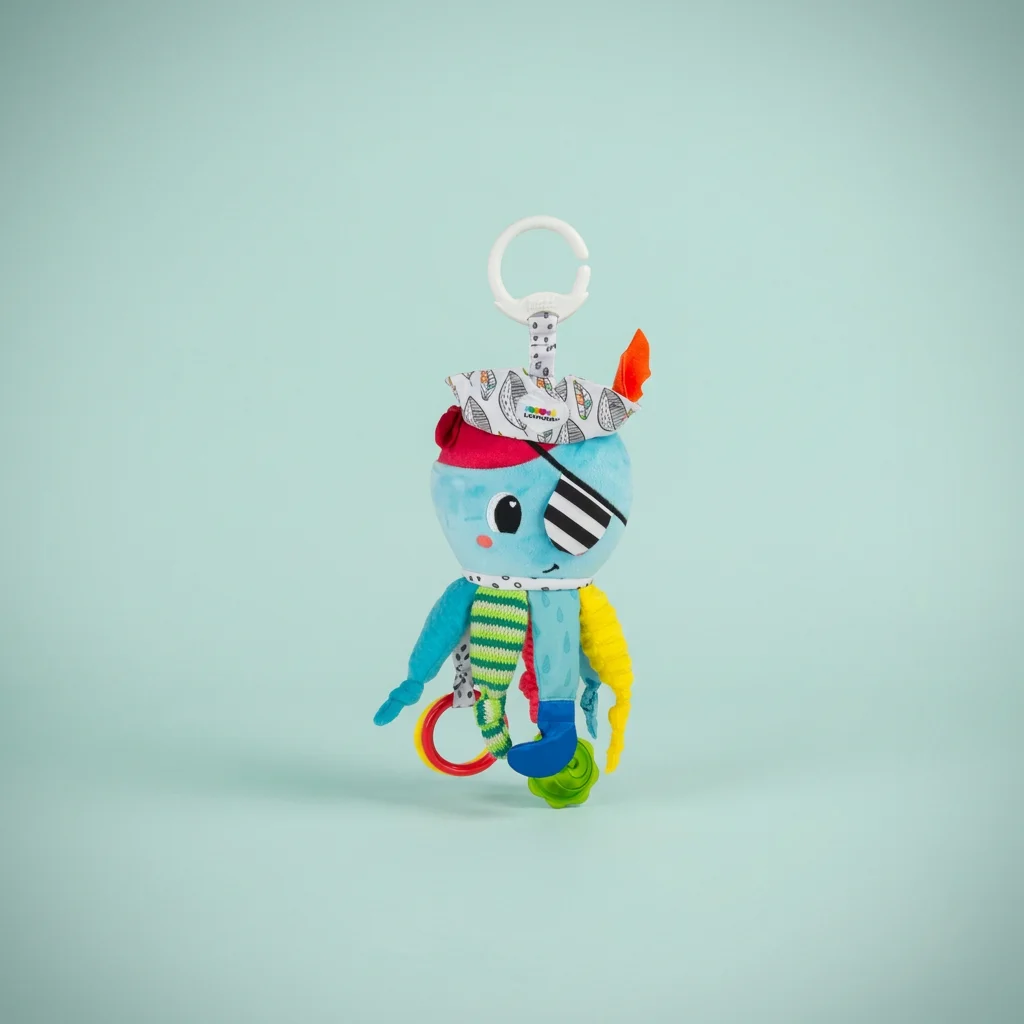
Lamaze Captain Calamari Clip-On Toy
A soft octopus full of crinkles, rattles and textures in high-contrast colors. It clips to the stroller and keeps baby's hands and senses busy.

beiens High Contrast Baby Flash Cards
Bold black-and-white images that newborn eyes can actually see. The simplest way to support early visual development, during tummy time or diaper changes.

Manhattan Toy Skwish Classic Rattle and Teether
Wooden rods and beads held by elastic cords that squish and bounce back into shape. A changing shape for early fine motor skills.
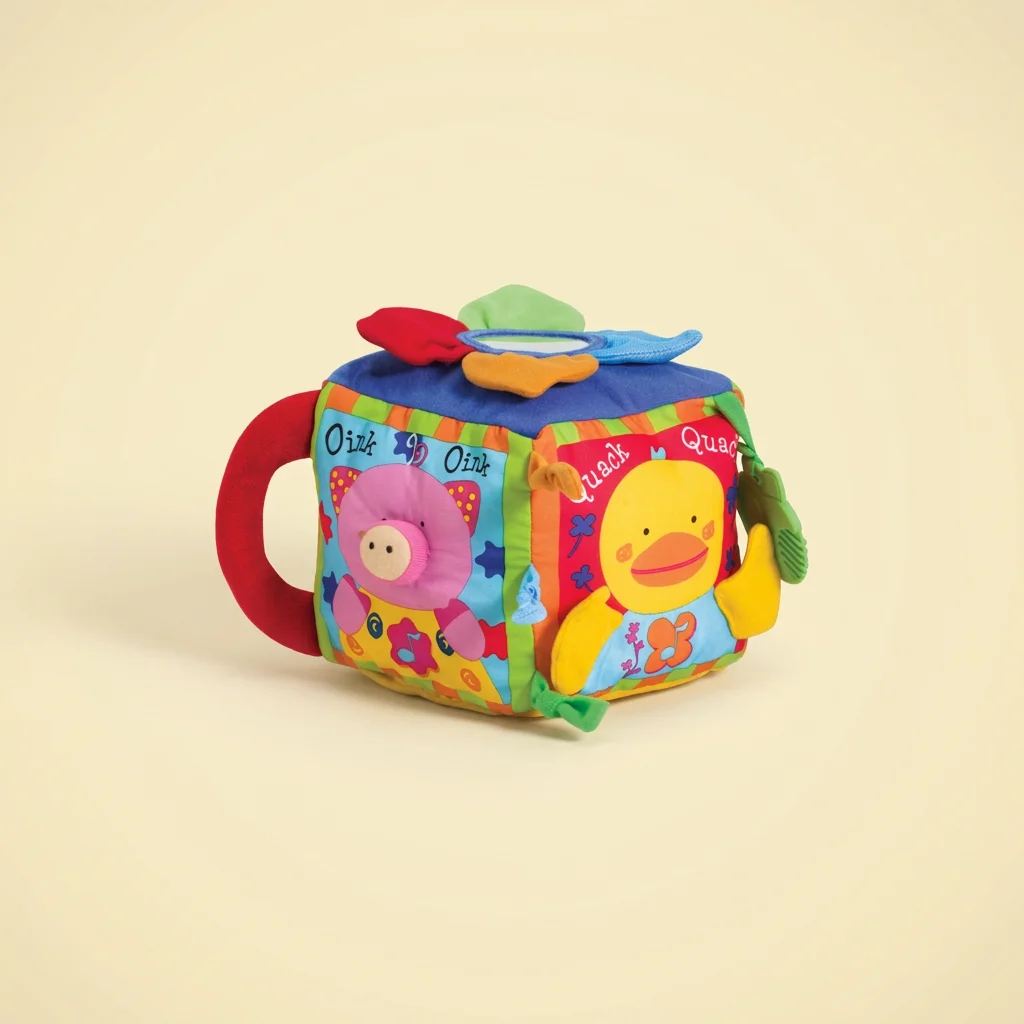
Melissa & Doug K's Kids Musical Farmyard Cube
A soft cube with crinkles, a baby-safe mirror, squeakers and farm friends on every side. A first sensory game to grab, squeeze and roll.

Hape Put-Stay Suction Rattle Set (Sea Animals)
Three suction-cup rattles that stay put on a high chair tray, so babies can bat, spin and shake them without dropping them on the floor every 10 seconds.
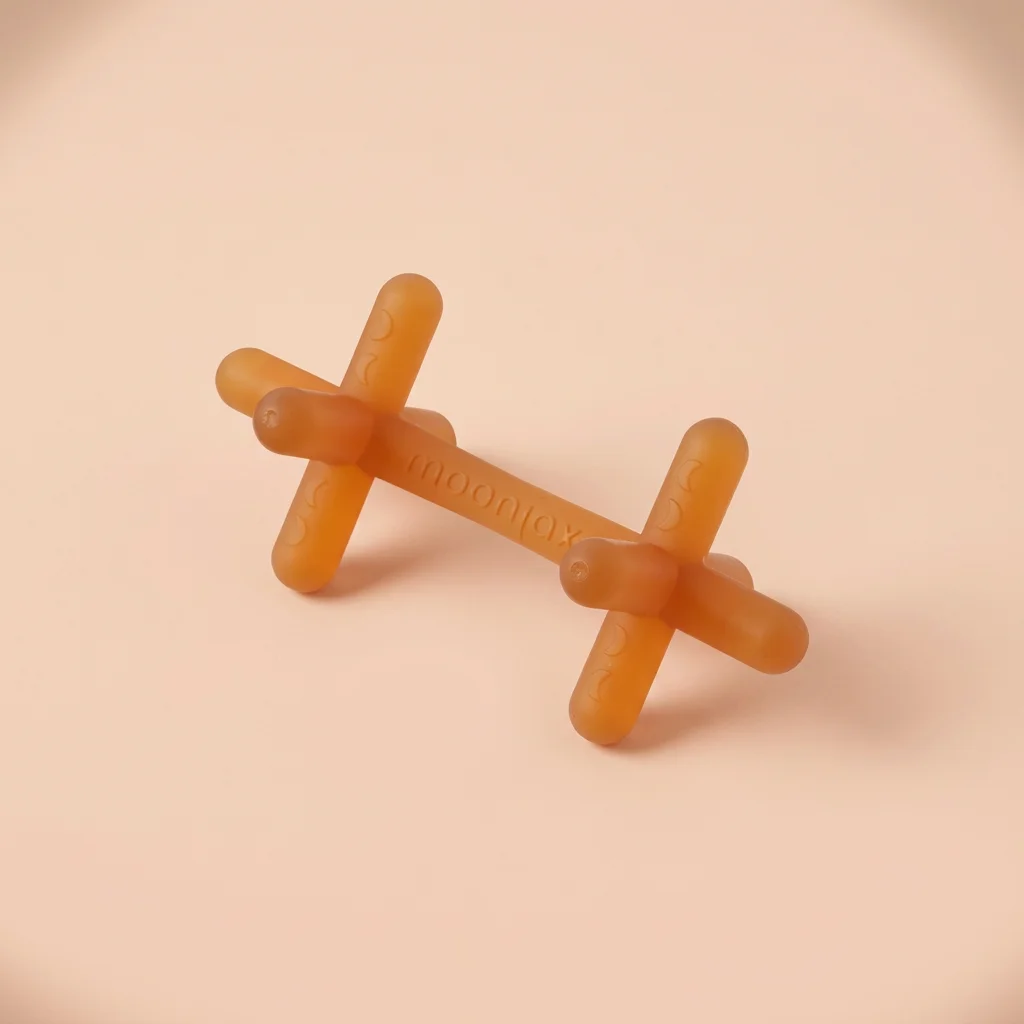
Moonjax Natural Rubber Baby Teethers
Soft natural-rubber teethers with different textures that soothe sore gums and fit tiny hands. No batteries, nothing to come loose.

Tiny Love 3-in-1 Take Along Mobile
A clip-on musical mobile that travels from crib to stroller, giving newborns something gentle to watch and listen to. Five melodies, about 30 minutes of music.
Types of Sensory Toys: Play Gyms, Mobiles, Rattles, Mirrors
Play Gyms and Arches
The command center of the first 6 months. Lying on their back, your baby discovers the arches, the hanging toys, the mirror. Go for removable arches, so the gym turns into a flat play mat once your baby starts crawling, around 7 to 9 months. Not sure which one? My Fisher-Price vs. Tiny Love play gym comparison helps.
Mobiles
Above the crib or the changing table. Musical mobiles soothe and hold attention. For the first months, go for high-contrast black-and-white mobiles. Hang them out of reach, and take any crib mobile down once your baby starts pushing up on hands and knees (usually around 5 months).
Rattles and Teethers
The first toy your baby holds (around 3 months). Wood, natural rubber or food-grade silicone. The names U.S. parents know: Sophie the Giraffe, Manhattan Toy Skwish, Lamaze.
Loveys and Soft Sensory Toys
A soft lovey with different textures (velvet, waffle cotton, plush, satin tags) becomes a real comfort object. One rule in the U.S.: the American Academy of Pediatrics advises keeping soft objects out of the crib for the first 12 months. Until then, a lovey like the Hudson Baby Fox Security Blanket (paid link) is for cuddles while your baby is awake, and joins bedtime after the first birthday. More in my stuffed animals and loveys category.
Sensory Toys for Babies: What to Skip (Overstimulation, Noisy Gadgets)
- Shrill, noisy toys (sirens, horns, robotic voices) that overload a baby's nervous system
- Flashing toys that grab attention without giving your baby anything to explore
- Stuffed animals, pillows or blankets in the crib before 12 months (safe sleep, AAP)
- Overloaded musical play mats that leave no room for free exploration
In the U.S., toys must meet the ASTM F963 safety standard, and toys made for kids under 3 can't contain small parts. Check who sells the toy (the “Sold by” line on Amazon): knockoffs of famous teethers turn up on marketplaces, with no guarantee they were ever tested. My full guide: U.S. toy safety standards explained.
Sensory Toys for Babies 0 to 12 Months: FAQ
How many sensory toys does a newborn need?
3 to 5 at a time, max: a mobile, a play gym, a rattle, a soft book. More than that is overstimulation. Fewer is plenty: your voice and skin-to-skin contact are still the best “toys” of the first weeks.
Are musical play gyms worth it?
Yes, if the music is soft and can be turned off. If it's a non-stop sound blast you can't control, no. Go for models with a volume setting and an OFF switch that's easy to reach.
When should I introduce a cloth book?
Around 4 or 5 months, as soon as your baby reaches for things on purpose. Look for books with a mirror, textures and strong contrast (Lamaze, Manhattan Toy, Wee Gallery). The Lamaze Fun with Colors Soft Baby Book (paid link) is a great first one.
To go further by age: see my guide to baby toys for 0 to 12 months, which walks through the first year month by month.