What Is Pretend Play, and Why Does It Matter So Much?
Pretend play is make-believe: the play kitchen, the pretend store, the garage, the doctor kit, the costume box. It's the most powerful kind of play for kids ages 2 to 7, because it lets your child replay the world they watch every day, figure out who does what, and work through their feelings.
Around 18 to 24 months, pretend play shows up (feeding a stuffed animal, "calling" someone on a banana). Around 3 to 4, it turns into real storytelling: the plot gets bigger, there are several characters, and the dialogue gets surprisingly complex.
Pretend play builds language, theory of mind (understanding that other people think differently than you do), emotional regulation and conflict resolution. For me, it's the category that builds the most skills at once between ages 2 and 6.
My Top 10 Pretend Play Toys for Kids
I ranked these for families in the US: toys that are easy to find, well loved by other parents, sturdy enough to be handed down, and right for the age on the box.
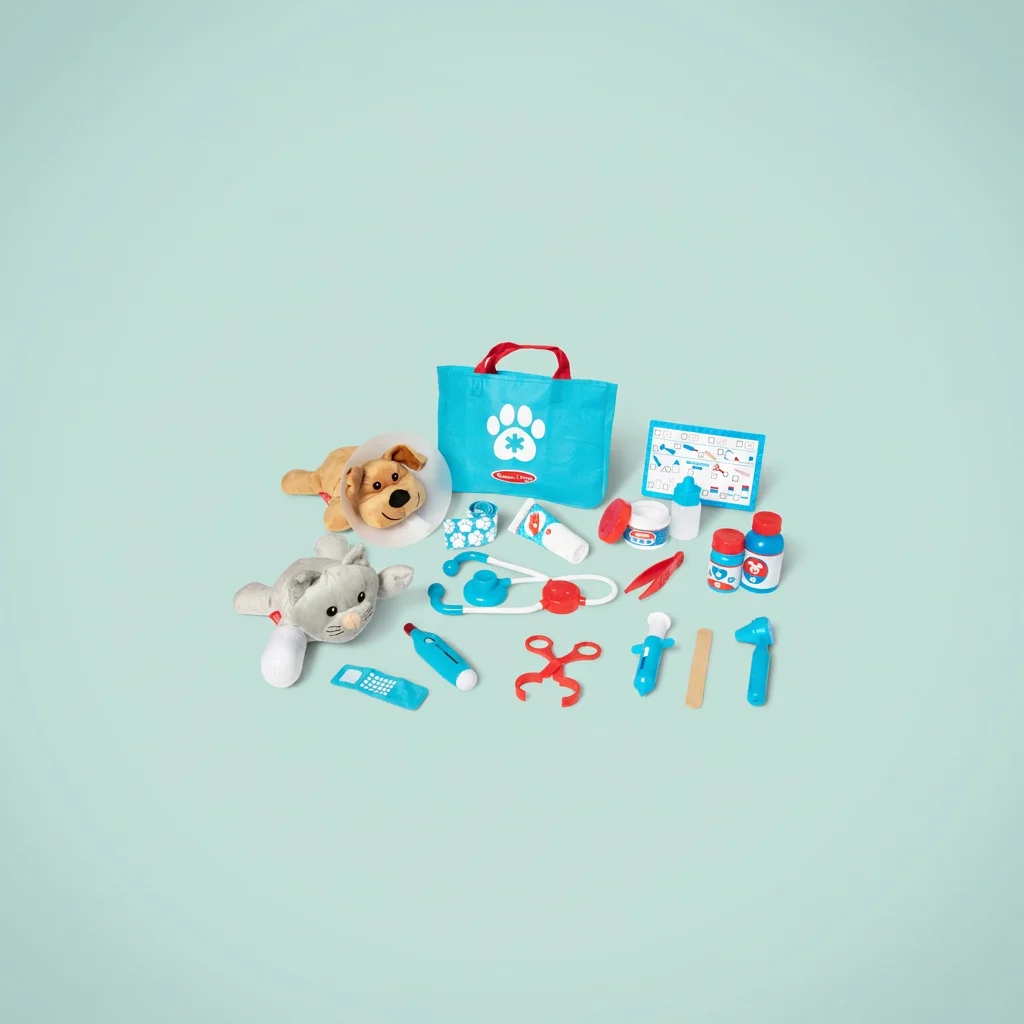
Melissa & Doug Examine and Treat Pet Vet Play Set
24 pieces with a plush pup and kitty, a stethoscope and a pet carrier. Taking care of a "sick" pet turns into empathy-rich play that lasts for years. My first pick for a 3- to 5-year-old.

ROBUD Wooden Play Kitchen
A wooden play kitchen where kids cook, serve and copy what grown-ups do. It's the toy with the longest life on this list: simple stirring at 3, full restaurant scenes at 6, and rich ground for new words.
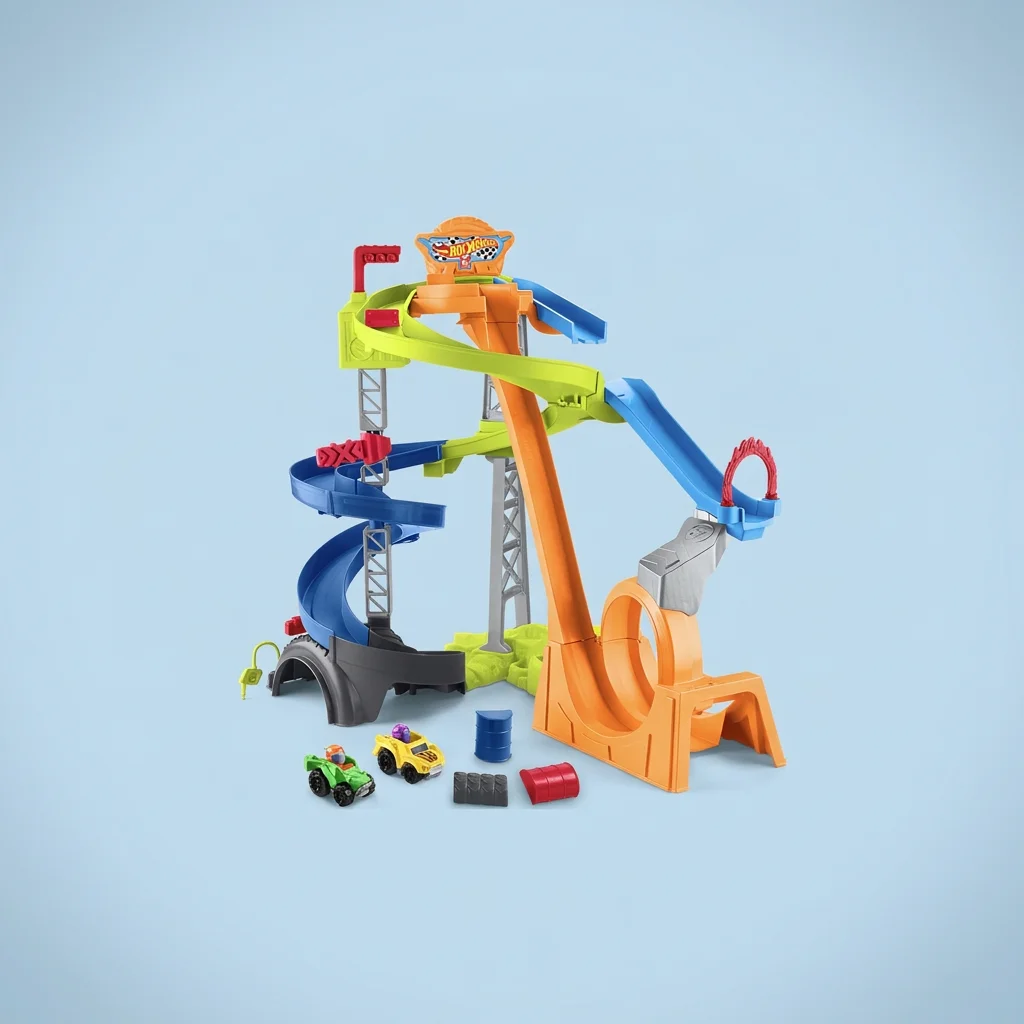
Fisher-Price Little People Hot Wheels Spiral Stunt Speedway
A spiral car ramp with chunky cars sized for little hands. Toddlers race, crash and invent their own stories. The first garage I'd pick for a 2-year-old.

BRIO World Parking Garage (33204)
A multi-level wooden garage with an elevator, a ramp, 2 cars and a transporter wagon. It works with every BRIO train set, so it grows with the track you already have.

BRIO World Travel Switching Set (33512)
A 42-piece wooden railway with switches and a bridge. Kids design their own layouts and solve little routing puzzles, and every BRIO piece you add later fits right in.
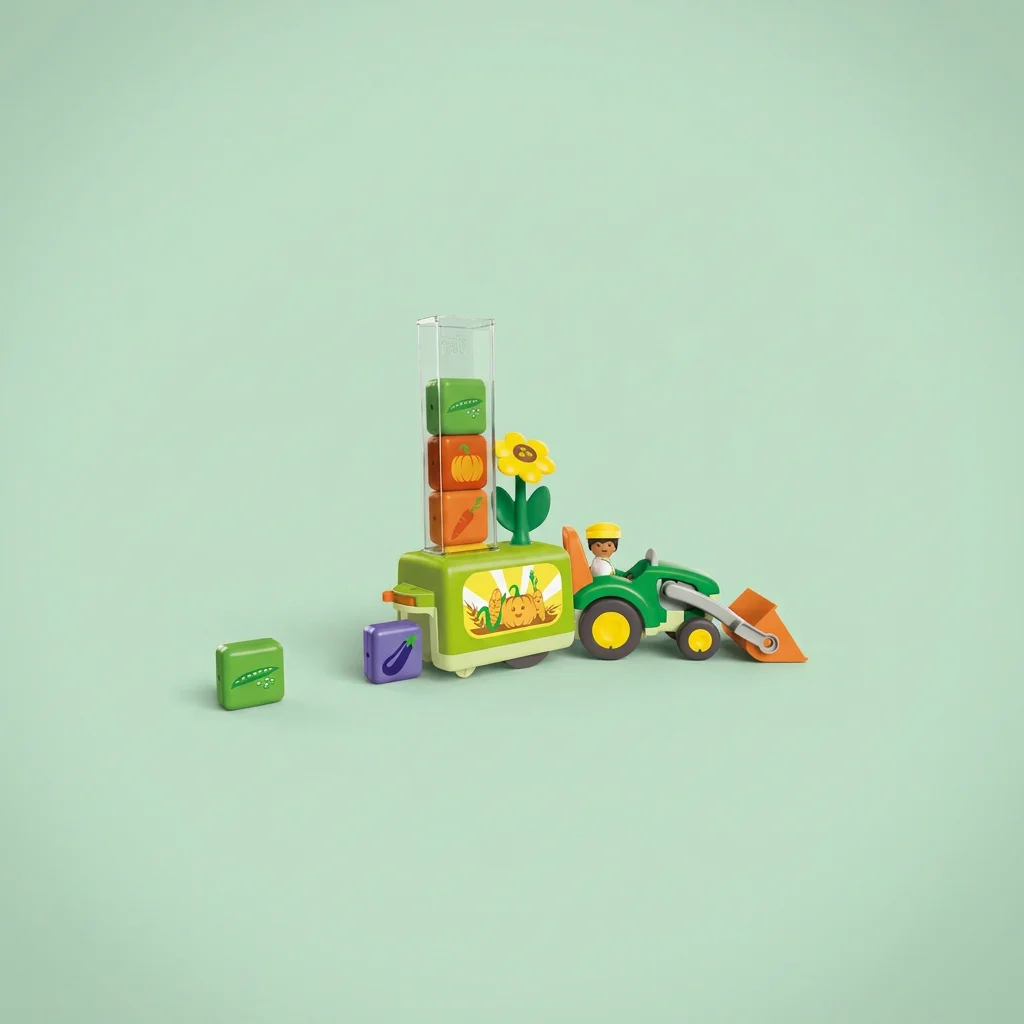
Playmobil Junior Tractor with Load and Drop Planter
A chunky farm tractor from Playmobil's Junior line, made for ages 1 and up. Load, unload, plant and tell little farm stories with big pieces built for small hands.

Corolle Manon Soft-Body Baby Doll (12 in)
A soft-bodied baby doll from the French doll maker, made for cuddling, feeding and tucking in. The perfect first doll once pretend play starts around 18 months, for boys and girls alike.

Schleich Farm World 5-Piece Farm Animal Set (42386)
Realistic, hand-painted farm animals that turn the coffee table into a whole farm. Tough enough to survive years of play and to join any barn or playset later.

Wooden Double-Sided Puppet Theater with Curtains
One side is a shop counter for playing store, the other a puppet stage with curtains: two kinds of pretend play in one piece of furniture. Playing store is how kids first handle "money", take turns and count out loud.

Snazaroo Face Paint Palette Kit (Fantasy)
Washable face paints that turn a rainy afternoon into a costume party: a tiger, a fairy, a superhero. Dress-up play without buying a new costume every time.
Which Pretend Play Toy at Which Age? My Guide from 18 Months to 7 Years
Pretend play changes fast with age. A toy that's too "big" stays in the toy box, and a toy that's too "babyish" gets old in a week. Here's the cheat sheet I keep in my notebook to pick the right pretend play toy at the right time:
| Age | What your child does | Pretend play toys that fit |
|---|---|---|
| 18 months to 2 years | Copies simple gestures: feeding a stuffed animal, stirring, "talking" on the phone | Wooden play food, a soft baby doll, first farm animals, a toddler shopping cart |
| 2 to 3 years | Strings two or three actions together and narrates what they're doing | Play kitchen, multi-level garage, Playmobil Junior farm, doll stroller |
| 3 to 4 years | Invents little scenarios and hands out the roles | Pretend store and cash register, vet or doctor kit, dress-up |
| 4 to 5 years | Stories get longer, with several characters and real dialogue | Small worlds with figures (Calico Critters, Schleich), a wooden train set, career costumes |
| 5 to 7 years | Plays with friends, using rules they make up themselves | Dollhouse, puppet theater, role-play with friends, "real" accessories |
Good to know: these ages are guideposts, not walls. A play kitchen bought at 3 still gets played with at 6 or 7, just with richer stories. That's why it sits so high on my top 10. If you're looking for a specific gift, my guides by age go deeper on pretend play: best gifts for a 2-year-old, best gifts for a 3-year-old and best gifts for a 4-year-old.
Pretend Play Toys: Kitchens, Pretend Stores, Dress-Up and Dolls
Play Kitchens, Play Food and Pretend Stores
The world of home. A play kitchen (Melissa & Doug, KidKraft, Hape and Step2 all make good ones), wooden or felt play food, a cash register. They easily last from 3 to 5 and beyond. Don't forget a few real mini utensils (a small rolling pin, metal spoons): they open the door to cooking together for real.
Garages, Trains and Farms
The world of things that move and things that grow. BRIO wooden railways (most sets are labeled 3+), Playmobil Junior and Fisher-Price Little People from 12 to 18 months, Schleich realistic animals from 3. Stick with one system for 2 or 3 years rather than mixing five brands: the whole set grows together.
Dress-Up and Costumes
Princess, knight, doctor, firefighter, pirate, superhero. Most kids get about one new costume a year (the rest get handed down between siblings). Look for sturdy fabric and closures your kiddo can manage alone, and keep a basket of hats, capes and scarves: it gets more use than any single costume. And Halloween is the perfect moment to add one good piece to the dress-up bin.
Dolls and Baby Dolls
A soft-bodied baby doll from 12 to 15 months (Corolle, Manhattan Toy's Baby Stella), a poseable baby doll from 3, a first set with a bottle and diapers from 2 or 3. Boys play with dolls too, and that's healthy and important: it's how kids practice taking care of someone.
Figures and Small Worlds
Schleich (realistic animals), Playmobil (the classic line from age 4), Calico Critters (ages 3 to 7, sold as Sylvanian Families in Europe). Building a "small world" on the coffee table is a favorite activity of 4- to 7-year-olds.
Wooden or Plastic Pretend Play Toys: Which Should You Choose?
It's the question I get most about play kitchens and play food. My honest answer: wood for the toys you'll keep for years, good-quality plastic for anything that goes outside or in the bath.
- Wooden pretend play toys (kitchens, cut-apart play food, cash registers) are sturdier, nicer to handle, and they age well: they get passed from one kid to the next. They cost a bit more up front, but they resell or get handed down. Look for a water-based, non-toxic finish and a statement that the toy meets ASTM F963 (the US toy safety standard), and prefer wood from responsibly managed forests (FSC label).
- Plastic pretend play toys are lighter and often cheaper. They make sense for a backyard mud kitchen, a garage or figures. What I skip: thin plastic that cracks within weeks, and toys loaded with electronic sounds that do the playing for the child.
Either way, the rule is the same: a simple pretend play toy leaves all the room for imagination. A kitchen with no sound effects becomes a restaurant, a bakery or a potion lab. To decode safety labels, I wrote my guide to US toy safety standards (ASTM F963, CPSC and the choking hazard label). And if you're shopping for the holidays, my Christmas gift ideas by age, from baby to 12 will help you narrow it down.
Pretend Play Toys I Skip: Noisy Gadgets and Over-Themed Sets
- Costumes that look too grown-up too early (ultra-glam outfits for 4-year-olds, stereotyped "girls only" or "boys only" sets)
- Ultra-specific licensed toys (one character, one use, tossed when the trend passes)
- Bright, flimsy plastic store sets that last six months and look worn out fast
- Electronic baby dolls that talk, cry and eat (they do the imagining for your child)
Pretend Play FAQ for Ages 2 to 7
At what age do kids start pretend play?
Around 18 months, when your child starts copying what you do: feeding a stuffed animal, stirring a pot, pretending to talk on the phone. A bit of play food or a soft baby doll is plenty to start. Pretend play really takes off between 3 and 6, when kids invent whole stories.
What pretend play toy should I get a 2-year-old?
At 2, I recommend something simple and sturdy: a small play kitchen, play food, a soft baby doll or a chunky garage. Skip sets with small accessories before age 3 (look for the "WARNING: CHOKING HAZARD -- Small parts. Not for children under 3 yrs." label on the box), and skip electronic toys that do the talking for your child.
What's the best pretend play gift for Christmas?
The most-loved pretend play toy is still the play kitchen: it works from 3 to 6 or 7 and siblings can share it. For a 3- to 5-year-old, a vet kit or a farm with animals are also Christmas gifts that get played with every single day.
My child plays "violent" games (pirates, knights, superheroes). Should I worry?
No. "Aggressive" pretend play is healthy and normal between 4 and 7. It's how kids explore good and bad, power, winning and losing. Just don't confuse pretend aggression (a foam sword) with real aggression (actually wanting to hurt someone).
My son loves the play kitchen and my daughter loves the garage. Is that OK?
More than OK: it's great. The skills they build (caring, storytelling, planning, fine motor skills) are the same whatever their gender. Offer both to every kid and let them pick what they love.
Should I play pretend with my child?
Yes, but let your child lead. Take the role your little buddy gives you, follow their wacky rules, and don't take over the story. 15 to 20 minutes a day of child-led pretend play is one of the best investments you can make between ages 2 and 6.