What's in the Stuffed Animals & Loveys Category?
This is the comfort and cuddles category. The lovey (what psychologists call a "transitional object", a term coined by pediatrician Donald Winnicott in 1953) keeps many kids company between 6 months and 4 years. Later, stuffed "friends" and collections (Jellycat, GUND, Squishmallows) carry that emotional bond on until age 8 or 10.
A lovey isn't a whim: it's a comfort tool that helps your child handle separation, falling asleep and big changes (starting daycare, a trip, a new sibling). Never take it away as a punishment. It leaves the stage on its own, usually between 5 and 7.
The American Academy of Pediatrics recommends a bare crib for at least the first 12 months: no stuffed animals, loveys, pillows, blankets or bumpers. Every lovey on this page is for cuddles, play and winding down in your arms. It can join the crib after the first birthday, and when in doubt, ask your pediatrician.
My Top 10 Stuffed Animals and Loveys for Babies and Kids
I ranked these for families in the US: brands you'll find easily, soft and well-made picks other parents trust, and the right fit for the age on the tag. From a first lovey to a teddy that stays for life.
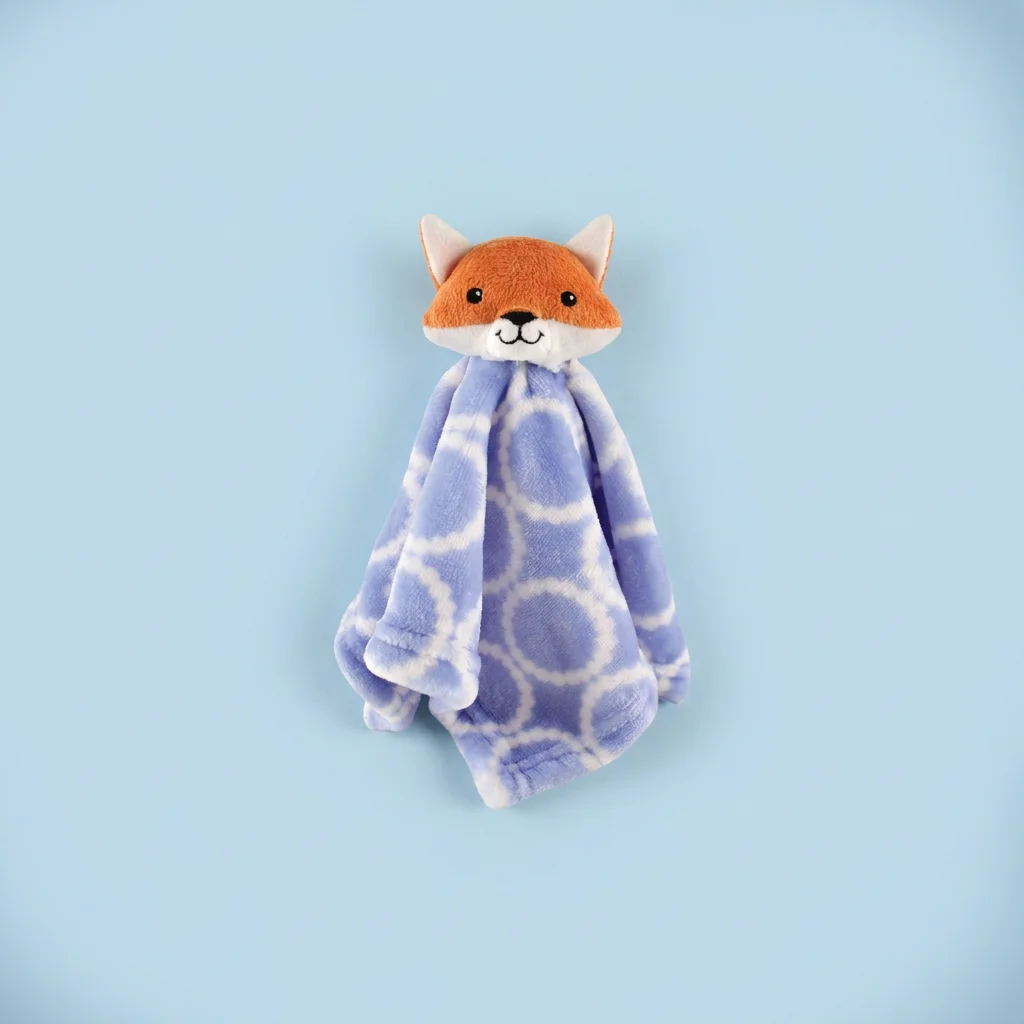
Hudson Baby Fox Security Blanket (Lovey)
A soft fox lovey sized for small hands, flat and light. A comforting companion for cuddles, car rides and new places (out of the crib until 12 months).

Jellycat Bashful Bunny (Medium, 12 in)
The famous floppy-eared bunny with that unmistakable super-soft fur. A first stuffed animal that babies love to hold and big kids still keep on the bed years later.
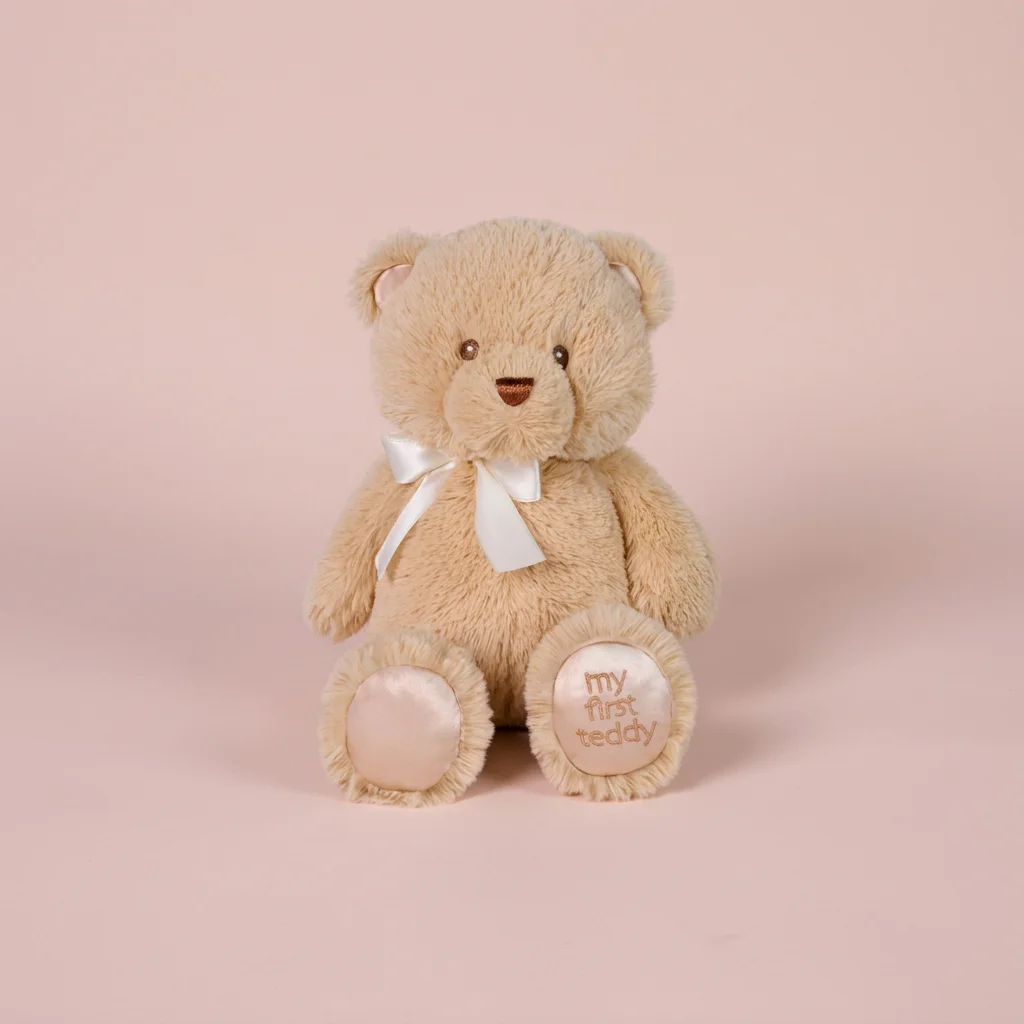
GUND My First Teddy Bear (10 in)
A soft, classic teddy from one of America's oldest plush makers, designed for babies and huggable for years. The kind of bear that becomes part of the family.

Steiff Jimmy Teddy Bear (12 in)
The German maker that helped invent the teddy bear, with its trademark button in the ear. Soft, beautifully made, and built to be hugged for years, then kept as a keepsake.

Cloud b Twilight Turtle Constellation Night Light
A soft turtle that projects a starry sky on the ceiling, with auto shut-off. It sits on the dresser and turns lights-out into a calm ritual that also sparks curiosity about the stars.

Sophie the Giraffe Award Gift Set
Not a stuffed animal, but often the very first "friend". The famous natural-rubber teether in a ready-to-give set, soft to chew and easy for tiny hands to grip.
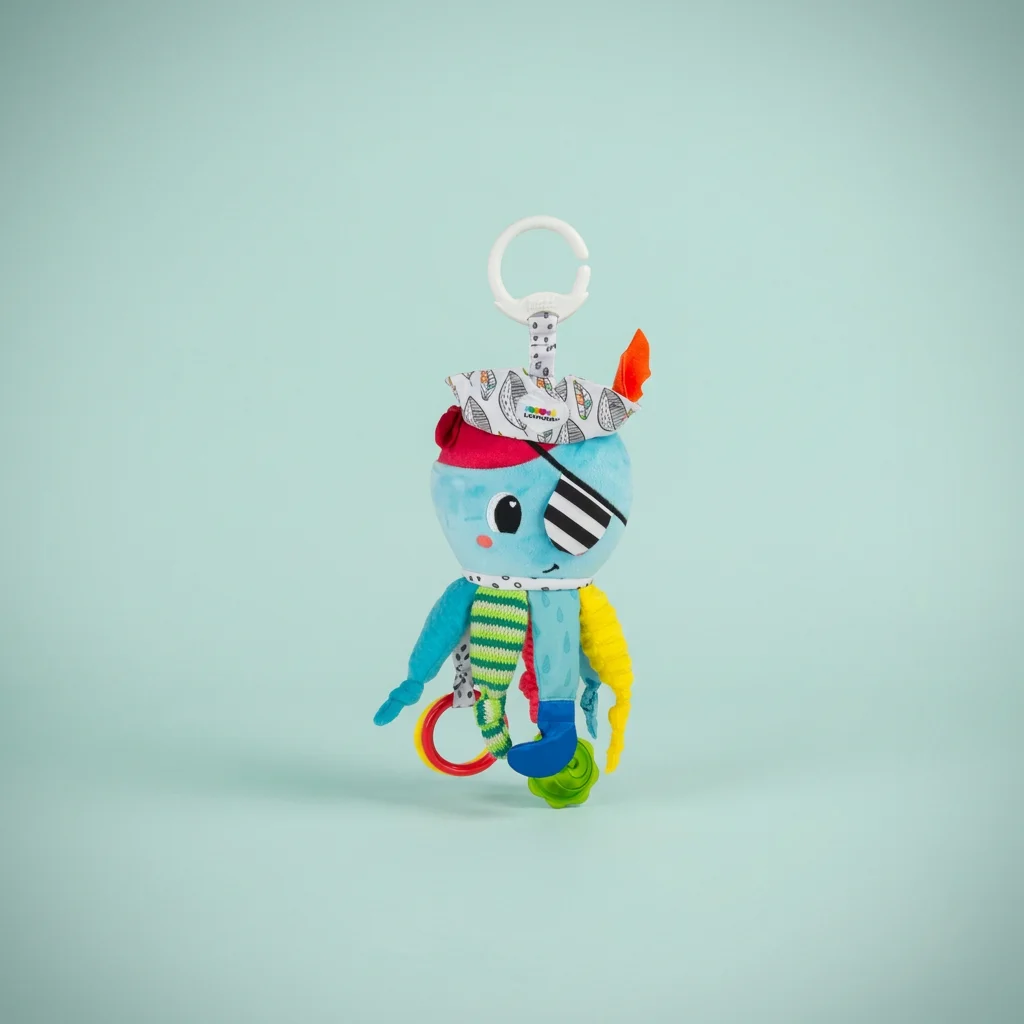
Lamaze Captain Calamari Clip-On Toy
My sensory plush pick: crinkly legs, different textures, bright colors and a clip for the stroller. Just what curious hands and mouths need between 3 and 12 months.

BEREST Bedtime Bunny Sleep Soother
A plush bunny that plays lullabies or white noise and projects stars. It sits on the dresser, not in the crib, at a low volume, and helps little ones settle into a calm bedtime routine.
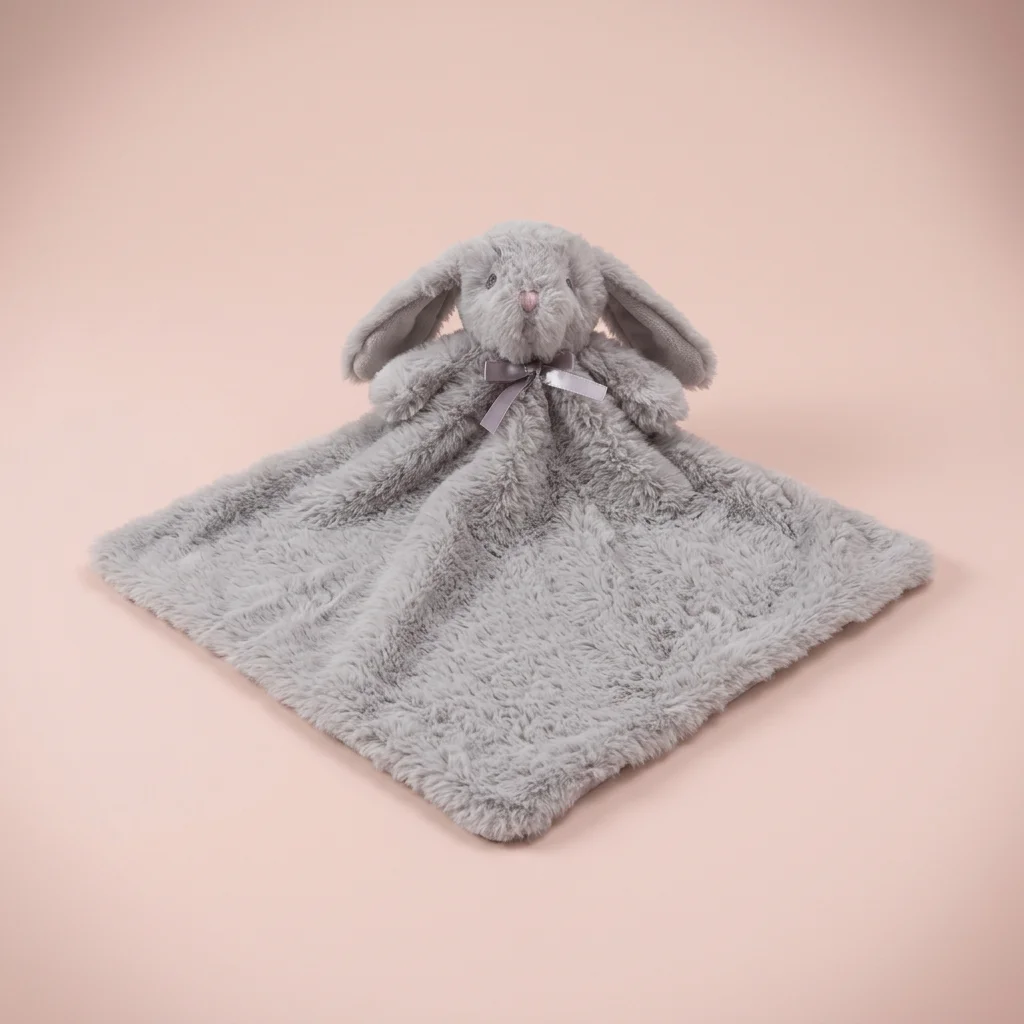
CREVENT Plush Baby Security Blanket (Lovey)
A small, flat bunny lovey with a faux-fur front and a soft minky back that babies love to grip and stroke. Budget-friendly, so buying two identical ones is easy (see my tip below).

GUND Itty Bitty Boo Plush (5 in)
A pocket-size version of Boo, the famously fluffy Pomeranian: soft, light and small enough to come along everywhere. A fun "friend" pick for toddlers and big kids who love dogs.
Stuffed Animals and Loveys by Age: From the First Lovey to a Lifelong Friend
0 to 6 Months: A Soft, Flat Lovey
Plain, soft fabric, no hard eyes or buttons to pull off: a lovey blanket like the Hudson Baby fox or the CREVENT bunny. Keep it against you for a few hours so it picks up your scent, and your baby will adopt it faster. For now it's for cuddles and awake time, never in the crib.
6 to 18 Months: Textures, Teething and a Backup
The lovey becomes a companion. Sophie the Giraffe for teething, first easy-to-grab plush toys (Lamaze, Jellycat). Buy two identical ones in case one gets lost: the golden rule of seasoned parents. After the first birthday, many pediatricians are fine with one small, light lovey in the crib: ask yours.
18 Months to 3 Years: The Lovey Becomes a Character
The lovey gets a name and a story. Your child talks to it, feeds it, tucks it in. It's the most intense phase of attachment, and the lovey goes everywhere. Wash it at night while your little one sleeps, never in the middle of the day ("it was crying" works if you need a reason).
3 to 7 Years: Stuffed "Friends" and Collections
The collection grows. Five to fifteen stuffed animals on the bed, each with its own role. Brands kids love: Jellycat, Steiff, GUND, Squishmallows. The main lovey stays at the center, and the others are the friends of the gang.
7 to 10 Years: The Sentimental Few
Your child keeps two or three "important" ones and the rest gather dust. It's fine to suggest sorting them together at this stage. Always keep the original lovey as a keepsake: plenty of grown-ups still have theirs.
Baby's First Stuffed Animal: My 5 Checks Before You Buy
A first stuffed animal is often the very first gift a baby gets, and sometimes the one they keep for life. Before falling for the cutest one on the shelf, I always check these five things:
- Embroidered eyes and nose, never glued on or snapped in: nothing should be able to come off and end up in a mouth.
- A reasonable size: 8 to 12 inches is easy to hold and cuddle. Save the giant ones for later.
- Machine washable on a gentle, cool cycle: a baby's lovey spends its life in mouths, on the floor and in everyone's arms.
- A brand you can identify, with a tracking label and a statement that it meets ASTM F963, the US toy safety standard. Bargain knockoffs sold online are the ones to watch out for. I explain how to read the label in my guide to US toy safety standards (ASTM F963, CPSC and the choking hazard label).
- Soft materials, no extras: no long ribbons, no glitter, no little sewn-on beads.
And one important word about sleep: the American Academy of Pediatrics recommends a crib with no stuffed animals, no pillows and no blankets for at least the first 12 months. The lovey keeps your baby company during cuddles, play and winding down in your arms. In the crib, it waits until after the first birthday, when your little one can move and push away anything that bothers them. When in doubt, ask your pediatrician.
Sensory Plush Toys for Babies: What Are They Really For?
A sensory plush (or developmental soft toy) mixes several textures: crinkly fabric, tags to grab, a teething ring, a soft rattle, high-contrast colors. Between 3 and 12 months, babies discover the world with their hands and mouths: those different sensations feed their curiosity and help refine their grasp. My advice: one or two sensory plush toys are enough, alternating with a simple "cuddle" lovey. Too much stimulation tires a baby out more than it wakes them up. To go further, I wrote my complete guide to developmental toys from birth to age 2 and my 10 favorite Montessori toys for babies, 0 to 12 months.
What's the Best Stuffed Animal for Kids Ages 3 to 8?
After 3, the stuffed animal becomes a friend, a character in stories, sometimes a collection. It's the age of plush with "personality": a mischievous fox, a super-soft bunny, a cartoon dog. At 7 or 8, lots of kids, girls and boys alike, still love stuffed animals, especially the very soft, slightly quirky ones they pick out themselves. A puppet plush also makes a lovely gift at this age: it turns into a theater character (I cover those in my puppets & magic category). For a complete gift idea by age, my Christmas gift ideas by age give you a lead for every stage.
Stuffed Animals I Skip: Crib Clutter and Knockoffs
- Any stuffed animal in the crib before 12 months, and giant ones above all (suffocation risk)
- Hard plastic eyes or buttons on plush for babies and young toddlers (if they come off, they end up in a mouth)
- Plush toys that talk and sing on their own during play (they do the imagining for your child; a bedtime soother with a timer, kept out of the crib, is a different story)
- Plush you can't machine wash (one stomach bug or one case of lice and it's a disaster)
Buy two identical loveys as soon as you see your baby has adopted one. Hide the second one. The day the first one gets lost (and it will happen), out comes number two: meltdown avoided. It's a lifesaver between 1 and 4.
Stuffed Animals and Loveys FAQ, Ages 0 to 8
What stuffed animal should I give for a new baby?
I recommend a flat lovey or a small stuffed animal of 8 to 12 inches, with embroidered eyes, machine washable and from a brand you can identify. It's the most useful baby gift, especially if you give two identical ones to cover the day the first one disappears. Just remind the parents: it stays out of the crib for the first 12 months.
When can my baby sleep with a lovey or stuffed animal?
Not before 12 months. The American Academy of Pediatrics recommends a bare crib for at least the first year. After the first birthday, one small, light lovey is usually fine, but check with your pediatrician.
What's the difference between a lovey and a stuffed animal?
A lovey is a comfort object: often flat and floppy, it reassures your baby and goes everywhere. A stuffed animal is a toy with volume that becomes a character in games and stories. Any of them can become the lovey if your child picks it: they're always the one who decides.
My child is 6 and still has a lovey. Should I worry?
Not at all. Lots of kids still need their lovey at 6 or 7, especially at bedtime and during transitions. It fades naturally around the start of elementary school. Never force the goodbye.
How do I wash a lovey without ruining it?
Machine wash on a gentle, cool cycle inside a pillowcase (so it keeps its shape), with a mild unscented detergent, then air dry. Skip the dryer, or use the no-heat setting (heat can mat the fur and damage stitched eyes). How often: every week or two for babies, about once a month after age 3.
What if the lovey is lost for good?
Expect a grieving period of 3 to 7 days, depending on the child. Don't offer a "replacement" right away: it can feel like a betrayal. Let your child express the sadness. A new one can arrive after a week, introduced as a "friend", not a replacement.