Best Convertible Balance Bikes: My 3 Picks That Grow with Your Kiddo
Looking for a balance bike that takes your little one from age 2 all the way to 5, without buying a second one halfway through? Good news: it really exists. Bad news: not every brand that prints "adjustable" or "grows with your child" on the box keeps that promise. I went through 8 models for you, and I'm keeping the 3 that are worth unboxing.
What Is a Convertible Balance Bike, and Why Does It Matter?
A convertible (or adjustable) balance bike is one whose seat, and ideally the handlebar, adjusts over a range wide enough to follow your kiddo from their first wobbly glides (often around age 2) to the day they switch to a pedal bike, around 4 or 5. In practice, that means a seat that drops to about 11 to 12 inches for a toddler who can barely touch the ground, and rises to 16.5 to 19 inches for a preschooler who's already flying down the sidewalk.
The "I'll buy a small one now and another one later" plan gets expensive: you pay twice, which is about what one good grow-with-me balance bike plus a decent first pedal bike would cost. And between us, little ones get as attached to their bike as to their favorite stuffy. Taking it away right when they start to really ride stings. A balance bike that grows with them solves both problems at once.
My 4 Criteria for a Good Convertible Balance Bike
You'll find everything out there, from the bargain bike that ends up in the garage after 6 months to the premium one that gets passed down for years. I only kept the models that check these 4 boxes. Marketing promises a lot; I only sign off on what I've seen hold up over time:
- A seat range of at least 5.5 inches: that's what separates a fixed bike (good for one year) from a real grow-with-me bike (ages 2 to 5). From about 11 to 16.5 inches at the very least, otherwise it's just marketing.
- Under 10 pounds: any heavier and a 2-year-old can't pick it back up alone after a tumble. Frustration kills the urge to hop back on.
- Foam tires or good air tires: air tires on premium bikes soften the bumps, but solid foam (EVA) tires like the Strider's never go flat. It depends on where your kiddo rides: smooth sidewalks or trails.
- Clear safety information: non-negotiable, as I explain in my guide to US toy safety standards (ASTM F963 and CPSC). If the brand doesn't clearly publish its safety and testing information, I don't recommend it. Period.
Strider 12 Sport: The Go-To Balance Bike from 18 Months
Let's look at it together. The Strider 12 Sport is the balance bike everyone knows: the one you see at kids' balance bike races, the one siblings pass down, the one that resells well used because it just doesn't break. Steel frame, about 7 pounds, a seat that goes from about 11 to 19 inches (one of the widest ranges out there) and an adjustable handlebar too. It's rated for ages 1 to 4: most kids start around 18 months, and with a taller seat post some keep riding it until 5.
Why is it my number 1? Because it starts at 18 months and keeps going for years without compromise, longer than any other bike here. The Cub below stops around 3, and a wooden bike is heavier for a small rider. If your little one is an early walker or you have siblings who'll share it, the Strider wins on longevity.
Strider 12 Sport Balance Bike
Ages 1 to 4
The honest downside: it's the priciest of the three. If your budget is tight, or you're starting right at age 2 (not before), the budget pick below gets your toddler gliding for noticeably less.
Retrospec Cub: My Budget Pick in the US
On the budget side, the bike I tested is the Kinderkraft Rapid 2, the successor of the Kinderkraft Comfort (no longer made): metal frame, about 8 pounds, a seat from about 12 to 16.5 inches and a retro look that's hard not to love. Kinderkraft rates it for ages 2 to 5, and after my 4 months of testing, I'd say that's accurate. It's all in my full Kinderkraft Rapid 2 review. The catch: Kinderkraft is a European brand, and the Rapid 2 can be hard to find in the US.
So when an American parent tells me "I want a good balance bike for a 2-year-old without overspending," I point to the Retrospec Cub: a light, no-pedal bike with an adjustable seat, puncture-proof tires and a low frame that's easy to step over. Be aware that Retrospec rates it from 18 months to 3 years, a shorter window than the Strider or the Rapid 2: think of it as a smart first bike rather than a one-and-done. I haven't tested the Cub myself, so this is my pick, not a review.
Retrospec Cub Balance Bike (12 in)
18 mo to 3 yrs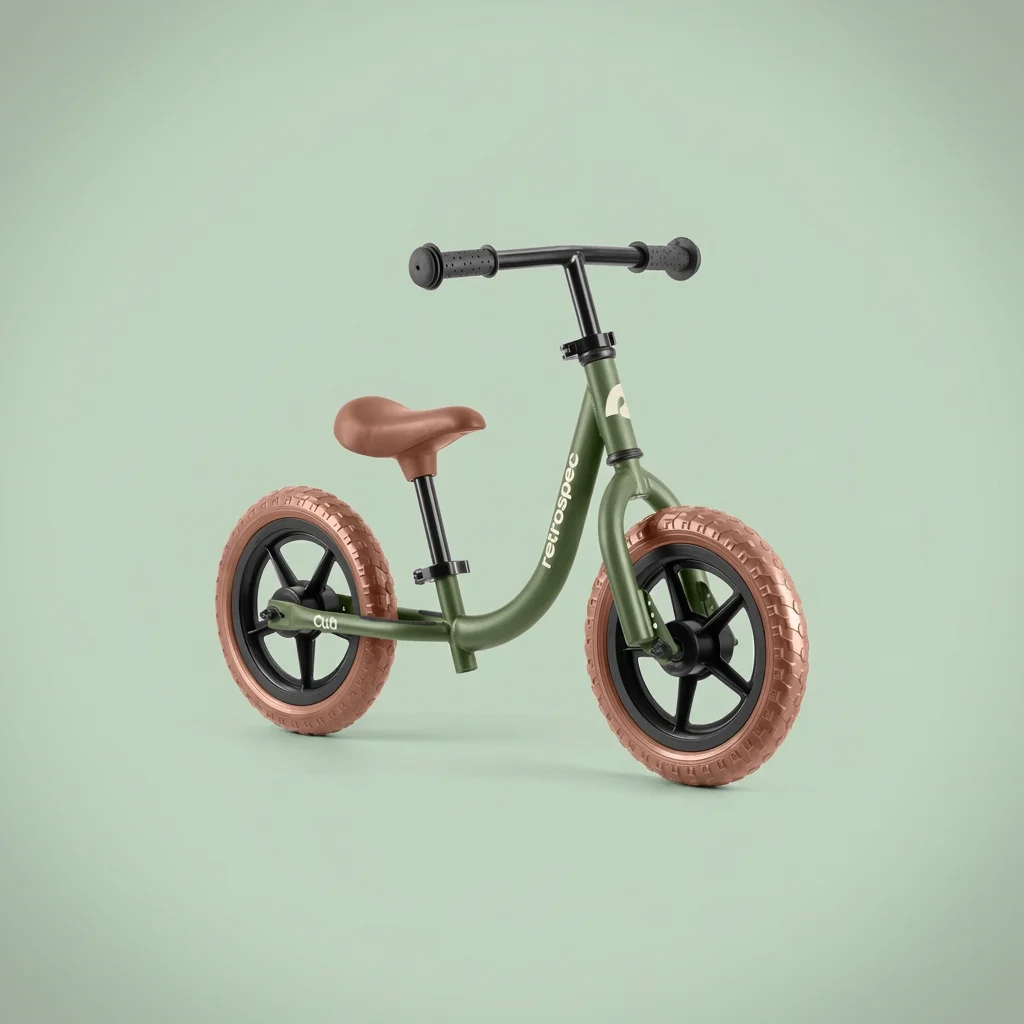
Kinderfeets Tiny Tot: The Wooden Pick That Starts as a Trike
Now for the cozier option. The wooden bike in my comparison notebook was the Janod Bikloon, from a French brand that's hard to find in the US. For an American family, my wooden pick is the Kinderfeets Tiny Tot, from a US maker of wooden balance bikes: a wooden ride-on that starts as a stable trike and becomes a balance bike, so toddlers learn to glide at their own pace. "Convertible" in the most literal sense. One thing to know: Kinderfeets rates the Tiny Tot for 12 to 24 months, so it's a very first ride-on, not a bike that grows with your kiddo to age 5.
Wood means a vintage look that fits right into a bedroom, a warm feel, and a material that gets a nice patina with age instead of ugly scratches. The trade-off: wooden bikes are usually heavier than metal ones (9 to 11 pounds for the ones I compared), which matters if your kiddo is on the small side. It's number 3 in my list, not because it's worse, but because it fits a specific use: mostly indoors, hardwood floors and the playroom, and parents who love the look of wood. For the backyard and heavy outdoor riding, go back to the Strider. I haven't tested the Tiny Tot myself: it's my pick, not a review.
Kinderfeets Tiny Tot Wooden 2-in-1 Trike and Balance Bike
12 to 24 mo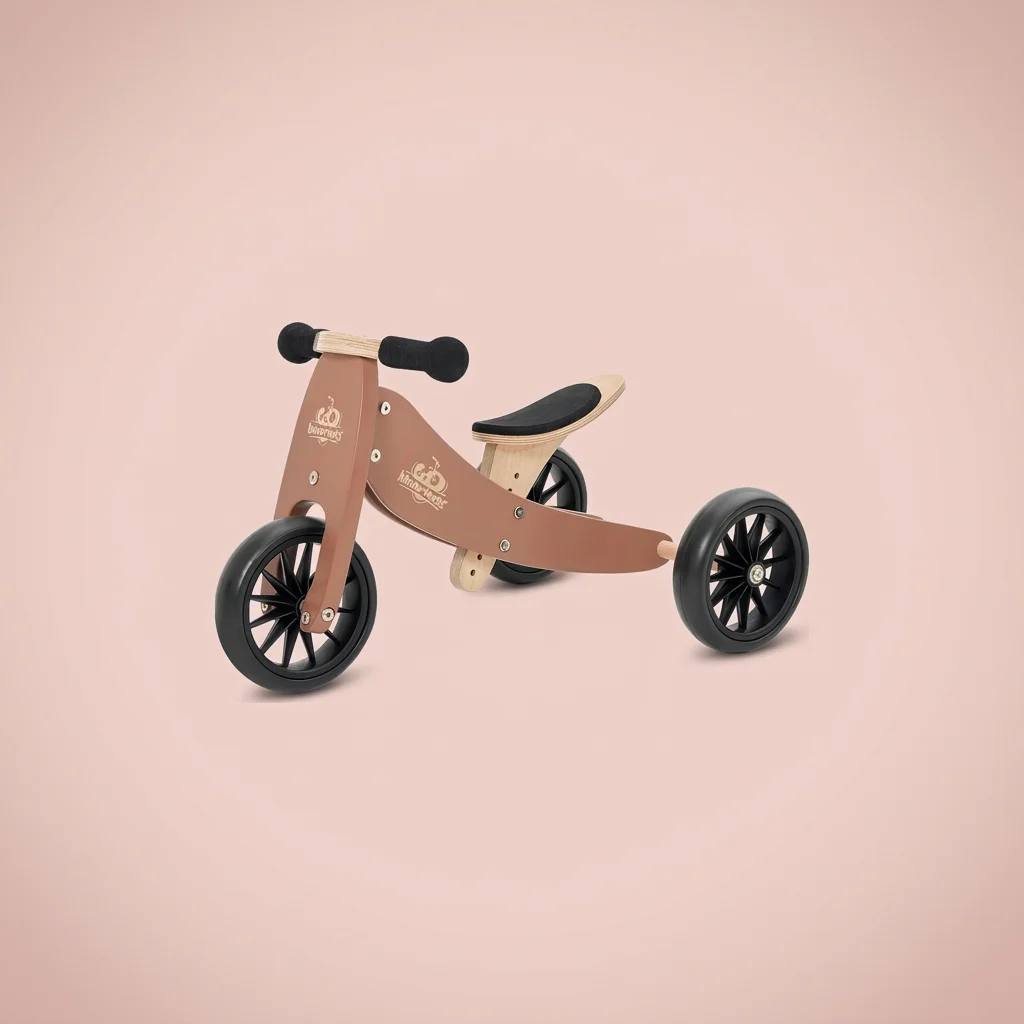
Balance Bike for a 2-Year-Old: What Age Is Right?
This one lands in my inbox every month: "Ludik, is 2 too early for a balance bike, or just right?" Honest answer: it depends on your child's size and how confidently they walk and run. Here's the rule of thumb I give parents:
- Under 18 months: too early. Your child doesn't have the moving balance yet to push off foot after foot, and they'll get discouraged. Stick with a ride-on toy until they run well. A convertible ride-on like the besrey 5-in-1 Toddler Bike (paid link) starts as a push trike and turns into a balance bike later.
- 18 to 24 months: the Strider 12 Sport goes low enough (about 11 inches), the Retrospec Cub starts here too, and the wooden Kinderfeets Tiny Tot can begin in trike mode for a toddler who isn't ready to glide yet.
- Right at age 2: the peak buying age. The Strider and the Retrospec Cub both work. The Cub is my budget pick in the US.
- 3 and up: all three work. A wooden bike shines indoors and on smooth paths; for rough sidewalks and trails, the steel Strider is the safe bet.
- Around 5: time for a pedal bike, no training wheels needed. The balance bike has done its job.
Want to see everything for this age and every ride-on I like? Head to my best toys for 1 to 3 years and my ride-ons & vehicles category. Everything is sorted so you don't get lost.
Verdict: Which Convertible Balance Bike Should You Choose?
Let's decide. If you want the balance bike that lasts the longest and survives a whole family of siblings: the Strider 12 Sport, no hesitation. If you want a good budget balance bike for a 2-year-old: the Retrospec Cub in the US (or the Kinderkraft Rapid 2 I tested, if you can find it), the sensible choice I give my parent friends. If you want a wooden bike that looks lovely in the bedroom: the Kinderfeets Tiny Tot, which starts as a trike and becomes a balance bike.
Still on the fence? Try my Toy Finder: 5 questions, 5 ideas, 30 seconds, matched to your child, your budget and the way they play. And if frame material is your number one question, read my wooden vs. metal balance bike comparison.