Wooden vs. Metal Balance Bike: My 2026 Comparison
It's THE question every parent asks me: should your little one get a wooden balance bike, or a steel or aluminum one like a Strider? I compared 8 models and filled a whole notebook page with notes. Here's what I took away from it.
Wooden or Metal Balance Bike: The Criteria That Actually Matter
A balance bike gets ridden almost every day for 2 to 3 years, so it's worth choosing well. The frame material changes four things: the weight (which decides how independent your kiddo can be), the durability (playroom or sidewalk?), the look (wood feels warm and vintage, metal looks sporty) and the cost.
Wooden vs. Metal Balance Bikes Side by Side: 6 Key Criteria
I compared 8 models on 6 criteria. The short version:
- Weight: metal wins (about 6.5 to 8 pounds, versus 9 to 11 pounds for most wooden bikes)
- Durability: a tie, as long as you give it a little care
- Looks: wood for the playroom, metal for the driveway and the park
- Cost: wood usually costs more at the same quality (small workshops versus big factories)
- Safety: a tie. Wood or metal, a balance bike sold in the US is a children's product and has to meet the same CPSC safety rules
- Adjustability: metal wins (the seat post is quicker and easier to adjust)
My Wooden Pick: Kinderfeets Tiny Tot
The wooden bike I picked in my comparison was the Janod Bikloon: birch frame, vintage look, about 10 pounds, easily 3 to 4 years of use, with a quick greasing of the wheel bearings once a year. But Janod is a French brand that's hard to find in the US. So for an American family, my wooden pick is the Kinderfeets Tiny Tot, from a US maker of wooden balance bikes: a wooden ride-on that starts as a stable trike and becomes a balance bike, so toddlers learn to glide at their own pace. It's rated for 12 to 24 months, so it covers the very first months of riding rather than the whole stretch to age 5. I haven't tested it myself: it's my pick, not a review. My pick if the bike lives mostly indoors and the look of the room matters to you.
Kinderfeets Tiny Tot Wooden 2-in-1 Trike and Balance Bike
12 to 24 mo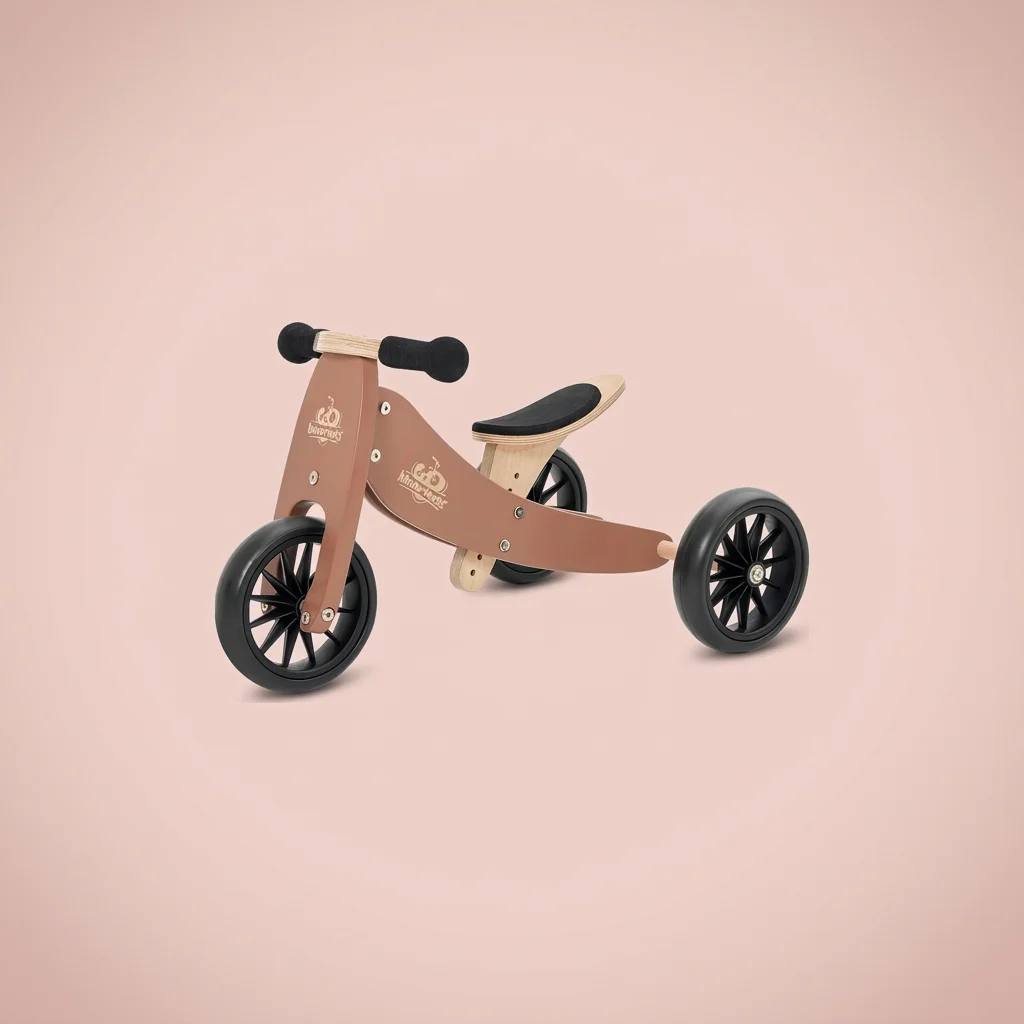
My Metal Pick: Strider 12 Sport
Tough steel frame, seat and handlebar that adjust as your child grows, flat-free foam tires, and it's rated for ages 1 to 4. It's the balance bike you see everywhere in the US: at the park, in the preschool parking lot, handed down from one sibling to the next. My pick for outdoor riding, bumpy paths and a bike that gets passed down.
Strider 12 Sport Balance Bike
Ages 1 to 4
The Budget Metal Option: The Kinderkraft I Tested, and My US Pick
The best value I found in metal was the Kinderkraft Rapid 2: about 8 pounds, the successor of the Kinderkraft Comfort (no longer made). The finish isn't the fanciest, but it easily does the job for 3 years. I tested it for 4 months with a 2-year-old, and it's all in my full Kinderkraft Rapid 2 review. Heads-up: Kinderkraft is a European brand, and the Rapid 2 can be hard to find in the US.
So for an American family on a budget, the metal bike I'd pick is the Retrospec Cub Balance Bike (paid link): light, no pedals, puncture-proof tires, an adjustable seat and a low frame that's easy to step over. Retrospec rates it from 18 months to 3 years, so it covers fewer years than the Strider. I haven't tested it myself: it's my pick, not a review.
Verdict: Wooden or Metal, Which Balance Bike Should You Choose?
Let's figure it out together. Tight budget and metal is fine? The Retrospec Cub. The look of the room comes first? Wood, with the Kinderfeets Tiny Tot. Lots of outdoor riding for your little one, or a bike that will serve several siblings? The Strider 12 Sport, tough steel that shrugs off curbs and gravel. To keep exploring first bikes and wheels, head to my ride-ons & vehicles category.